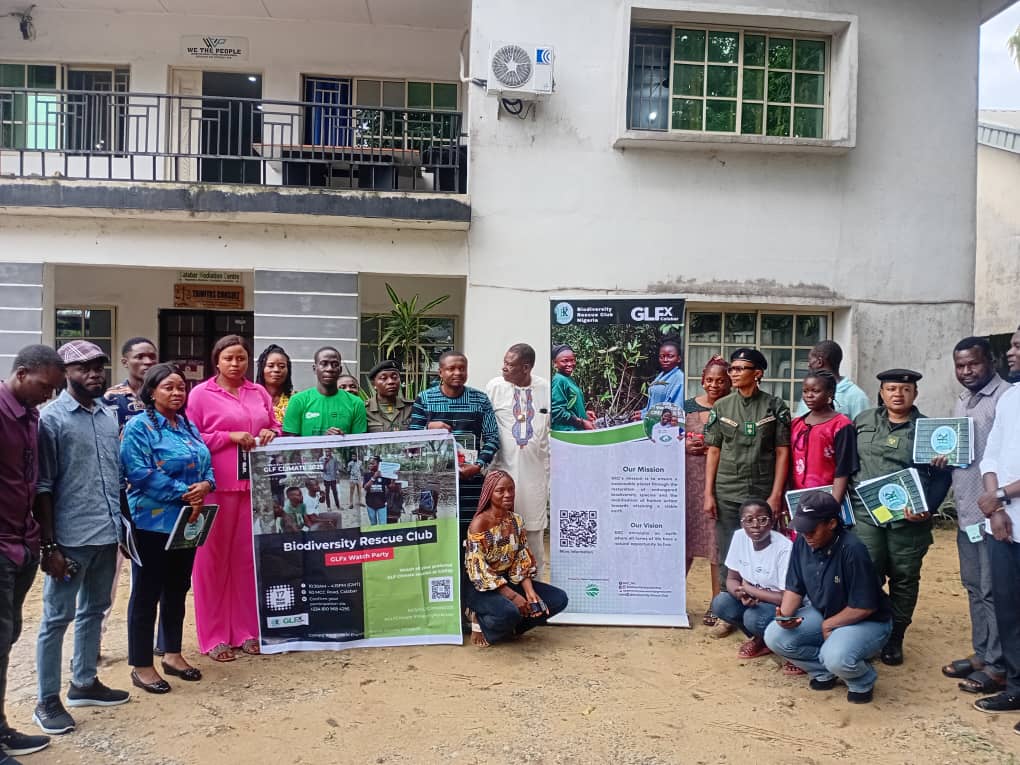
Biodiversity Rescue Club (BRC), the chapter of the Global Landscapes Forum (GLF) in Calabar, has called for total restoration and effective sustainable conservation and management of the fast degraded mangrove ecosystems in Cross River State.
The group made the call at a stakeholders’ engagement to develop and implement a comprehensive mangrove restoration and sustainability action plan in Calabar, the State capital.
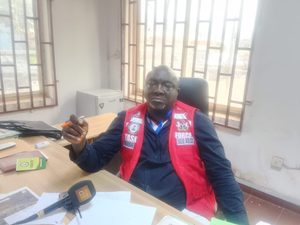
The State Director of the biodiversity Rescue Club, Mr Clement Oko, who spoke with journalists noted that the group as a young organisation of the Global Landscapes Forum, has recently restored up to two Hectares of once graded mangrove ecosystem in Essierebom coastal community in Calabar South, Calabar, Cross River State.
He explained that the organisation is strongly advocating for mangrove restoration to curb the adverse effect of deforestation on climate and its negative impacts on our resources and communities, and to create awareness and educate the young people to become environmental stewards to protect the mangrove ecosystem for future generations.
He explained that the organisation is pushing for mangrove restoration to combat deforestation’s harmful effects on climate, resources, and communities as well as to educate young people to become environmental stewards, protecting the mangrove ecosystem for future generations.
“We are currently advocating for mangrove restoration and conservation while also raising awareness in public schools, educating young people cater for and protect the mangrove,” he said.
Mr Oko noted that the biodiversity rescue club in collaboration with the right academy, is restoring the mangrove ecosystem in the Idundu community in Akpabuyo Local Government Area of the State.
“In the Idundu community, the Biodiversity Rescue Club actually works with the right academy to restore the mangrove in that community. Currently, we have raised more nurseries to be planted in that community,” he added.
Also speaking, a plant ecologist and biodiversity informaticist, Dr Patrick Akwaji, highlighted the impact of climate change due to mangrove degradation to include a wide range of flooring, which according to him has destroyed a whole lot of farm lands and landscapes.
“The timbers are logged down at will in villages, in the forest, and no definite protection is given to this biodiversity, and as such, it is impacting negatively on our resources,” he said.
Dr Akwaji stressed that the climate change crisis can be mitigated by embracing sustainable forestry, noting that forests act as carbon sequestration.
“Each tree you down, you release back whatever quantity of carbon that the tree has sequestered back into the atmosphere, and when this is done, it releases the green house gases, which continues to deplete the ozone layers, and as long as the ozone layers continue to be depleted, it will continue to impact climate change, and we will continue to have extreme whether conditions, intense increase in rainfall and sunshine,” he explained.
Some of the representatives of Essierebom and Idundu communities who were present at the event appreciated the Biodiversity Rescue group and its global platform for their swift intervention restoring the once degraded mangrove ecosystems in their communities, to develop a sustainable economic livelihoods for their people and the State at large.