
The Executive Director, Africa Network for Environment and Economic Justice (ANEEJ), Reverend David Ugolor has called for a coordinated, inclusive and sustainable accountability mechanism that empowers citizens, strengthens institutions, and ensures recovered assets are properly managed for public good.
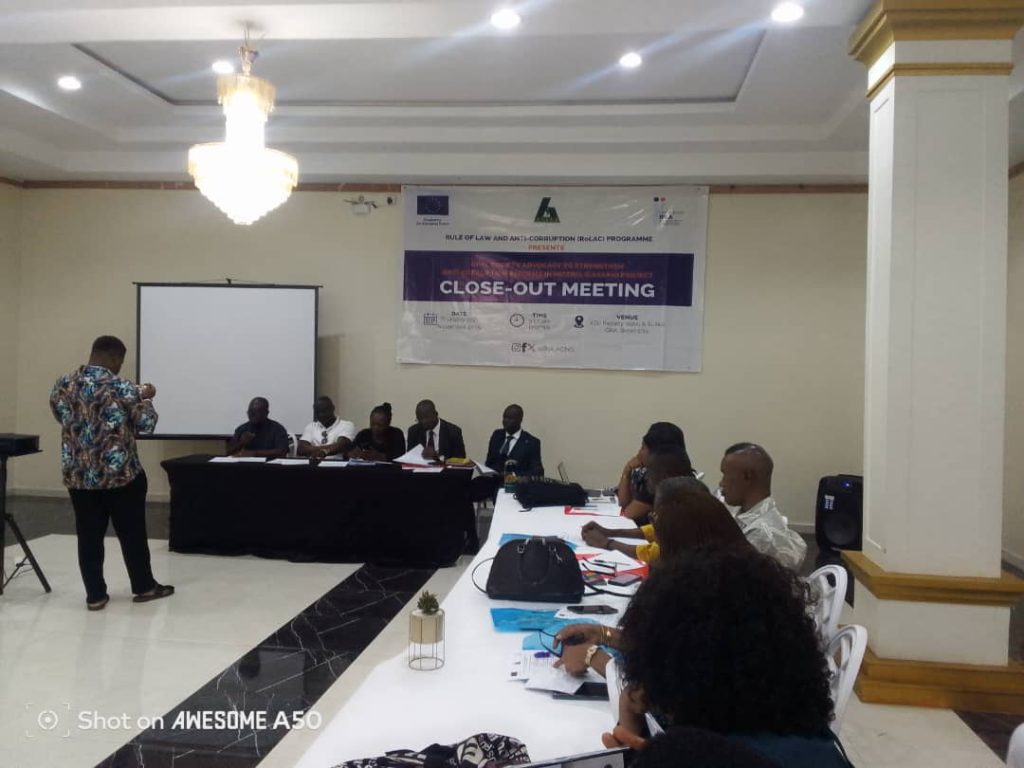
He made the call at the Civil Society Advocacy to Strengthen Anti-corruption Reforms in Nigeria, CASARN project close out meeting held in Benin city, Edo state.
The ANEEJ Executive Director who added that Since the introduction of the Whistleblowing Policy and the Asset Recovery & Management Framework by the Federal Government, Nigeria has made meaningful progress in exposing corruption, recovering stolen assets, and strengthening public trust in accountability mechanisms, among others appealed for the enactment of legislation to safeguard Whistleblowing.
“The establishment of the Asset Recovery and Management Unit at the Federal Ministry of Justice and the enactment of the Proceeds of Crime (Recovery and Management) Act (POCA) 2022 are significant steps that have improved coordination and legal clarity around asset recovery.”
” However, as we all know, these gains remain fragile. Implementation gaps, weak institutional protections for whistleblowers, limited awareness among citizens, and the absence of harmonised structures at state level continue to undermine the full potential of these reforms.
” Many whistleblowers still fear retaliation; many citizens remain unsure about reporting channels; and several institutions lack the capacity or clarity required to manage recovered assets transparently.
He called on Edo state Government to domesticate Whistleblowing policy in the state to enhance transparency and accountability in the state.
“Edo State has taken important strides in promoting transparency and public financial integrity. Yet, the full benefits of whistleblowing and asset recovery frameworks cannot be realised unless they are deliberately adapted, strengthened, and operationalised at the sub-national level. States are closest to the people; states manage procurement, budgeting, service delivery, and frontline governance.
“Therefore, if whistleblowing must work for ordinary citizens, it must work at the state level.
And if asset recovery must produce real development outcomes, then state institutions must have the capacity and systems to manage recovered assets responsibly.”
Earlier in a remark, Edo state Commissioner for Information and Strategy, Prince Kassim Afegbua who
commended ANEEJ for sustaining the advocacy for good governance and anti-Corruption in Nigeria said the Ministry of Information and Strategy will deepen collaboration with Civil Society Organisations, in the advocacy for good governance in the state
” I want to appreciate all change agents helping ANEEJ to drive the issues to make society move forward. When institutions are put in place, we need human beings, strong personalities to drive these institutions with a sense of patriotism.
“The Ministry of Information and Strategy is your ally because we believe that a government must not be afraid of criticism, we welcome constructive criticism. Advocacy such as this is good, we will keep talking and engaging,” the Commissioner noted.
The event which had the attendance of some representatives of various Civil Society Organisations, CSOs and the Media featured goodwill messages from representatives of ICPC, EFCC, Edo state Ministry of Justice among others.
The CASARN project is a one-year project implemented under the Rule of Law and Anti-Corruption (RoLAC II) pro project and the International Institute for Democracy and Electoral Assistance (International IDEA).