Cross River State has recorded about 50 percent reduction in Soil-Transmitted Helminth (STH) and also had a decline in Schistosomiasis (SCH) infections across the State.
The State Ministry of Health in collaboration with the Federal Ministry of Health and Evidence Action Nigeria also announced a landmark achievement in the fight against Neglected Tropical Diseases (NTDs).
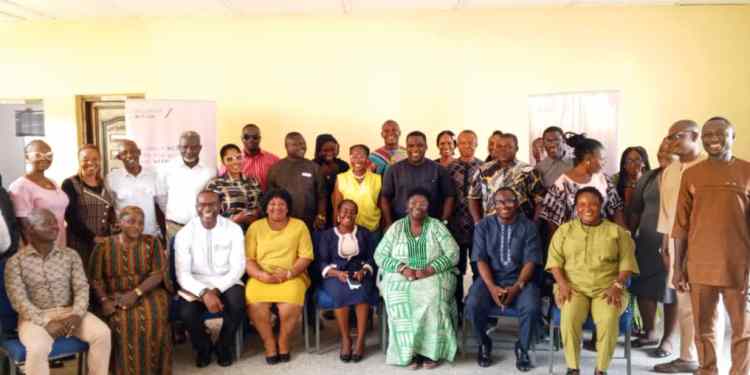
The findings were made known during a day stakeholders engagement on the presentation of the 2016-2024 report on preventive chemotherapy of schistosomiasis and soil transmitted helminthiasis in the 18 Local Government Areas of the State held at the Essential Drugs Complex in Calabar, the state capital.
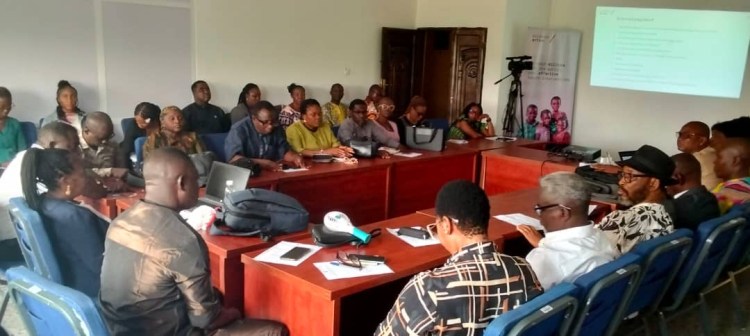
Presenting the report at the Essential Drugs Program office in Calabar, Senior Program Manager of Evidence Action, Toochi Ohaji, said his organisation over the years, supported the state in the programme of neglected tropical diseases especially soil transmitted helminthiasis, schistosomiasis and intestinal worms, targeting children aged five to 14 years, in order to achieve the feat.
In his word, “This is not an ordinary achievement. It gives us, the donors (the Federal Ministry of Health, the state, and all key stakeholders) joy to see that we have been able to reduce the burden of soil-transmitted helminth in Cross River. A whole lot of investment and resources went into this feat.
“The report highlighted that the reduction was consistent across various Local Government Areas (LGAs), with Akamkpa recording the highest reduction at 62%, while Biase recorded 19.5%.
“The success in Schistosomiasis (SCH) control was even more pronounced. The assessment showed that State prevalence dropped from a baseline of 5.7% to a current 1.42%, representing a 76.6% rate reduction.
“For those of us in this programme, Schistosomiasis is a more serious burden than soil-transmitted helminth in terms of planning, treatment, and monitoring.
“This means prevalence of Schistosomiasis decreased by a 96% rate reduction at the State level (in specific metrics), with the highest decrease observed in Obudu,” Ohaji explained.
Reflecting on the journey so far, the Senior Programme Manager stated that the programme’s success came despite significant cultural and logistical hurdles.
He recounted battling “unfounded rumours” and propaganda that initially hindered sample collection in rural communities.
“We had rumours of people saying we were collecting children’s stool for rituals.
“Parents were running to schools to take their children away. We had to carry out high-level advocacy and sensitization to inform the people that this was for their health.
“In one instance, a Paramount Ruler in Northern Cross River had to intervene personally to dispel these myths and support the health teams,” he said.
The report also surveyed 2,082 pupils on Water, Sanitation, and Hygiene (WASH) practices. While 73% of pupils reported washing their hands after using the restroom and 92% of schools taught health education, concerns remain over open defecation, with 14% of pupils still practicing it.
The assessment found that 60% of schools have toilets, but nearly half (43%) are in poor condition. Furthermore, 52% of schools with toilets lacked access to water or tissue paper.
Despite the “whopping achievement,” the team warned that the work is far from over.
It noted that under World Health Organisation (WHO) guidelines, “elimination” is only recognized when prevalence drops below 2%, while Schistosomiasis has reached this threshold statewide (1.4%), STH remains at 12.6%.
“We still have much work to do. We keep pushing,” the senior programme manager at Evidence Action emphasized, stressing that, “The next line of action will be planning for another round of treatment for 2026.”
“We will decide which LGAs need treatment once a year, twice a year, or once every two years,” he stated.
The report informed that while seven years of preventive chemotherapy (deworming) have yielded massive gains, sustaining these results will require “increased cross-sectoral collaboration” to improve water and sanitation infrastructure across the State.
The report further recommended that, moving forward and in line with WHO guidelines, Bakassi local government area in the state should increase STH treatment to twice a year when medicine, operational and logistics feasibility are sufficient, while seven local government areas of Akamkpa, Akpabuyo, Biase, Calabar South, Etung, Odukpani and Yakurr maintain treatment at once per year, adding also that, Calabar Municipal decreases its treatment to once per two years.
Also speaking, the Director/Programme Manager of National Schistosomiasis and Soil Transmitted Helminthiasis Elimination Programme, Federal Ministry of Health and Social welfare, Mrs Imaobong Umah, applauded Evidence Action and other relevant partners for their interventions in six States of Nigeria including Cross River, maintaining that the federal government desires that children and the aged, remain healthy while ensuring that schistosomiasis and helminthiasis are eliminated come 2030 in line with WHO mandate.
Mrs Umah advised that if the eradication must be achieved, all must observe basic hygiene and inculcate certain behavioural change.
“It is good to have a good result but if you don’t sustain it, you will go back to the basics. So, in eradicating NTDs, hygiene is paramount and must be embraced to the fullest,” the federal Director said.
Earlier, the Permanent Secretary, Cross River State Ministry of Health, Dr. Jonah Offor, appreciated the relevant stakeholders that worked tirelessly to achieve the result.
Dr Offor represented by the Director, Public Health in the Ministry, Patrick Odu, affirmed that the magnanimity of the Governor, Prince Bassey Otu, went a long way in providing conducive environment for the result to be achieved, pointing out that, with four NTDs domiciled in the state, there was need for all to work hand in glove towards the eradication.
There were also goodwill messages from the State Ministry of Education, Primary Healthcare Development Agency, State Universal Basic Education Board (SUBEB), Evidence Action, among others.