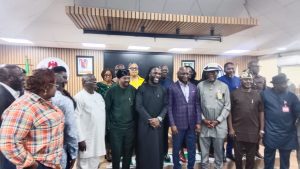
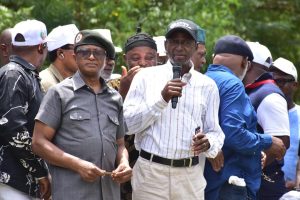
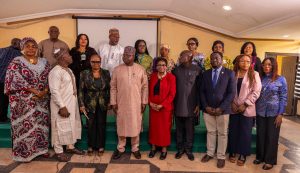
As the global community intensifies efforts to end Gender-Based Violence (GBV) in all its forms, the Cross River State Government, in collaboration with the World Bank-assisted Nigeria Community Action for Resilience and Economic Stimulus (NG-CARES) programme, is taking decisive steps to mainstream gender equity, social protection, and survivor-centered justice into governance and development programming.
This commitment was reaffirmed at a three-day Step-Down Training on Gender-Based Violence and Grievance Redress Mechanism (GRM), held in Calabar. Speaking during the opening session, the Commissioner for International Donor Coordination, Dr. Hippolatus Lukpata, emphasized that the administration of Governor Bassey Otu, guided by its ‘People First’ philosophy, was resolute in ensuring that the people of Cross River benefit from the transformative impact of the NG-CARES programme.
“Gender-based violence is not just a human rights issue—it is a development challenge,” Dr. Lukpata said. “Cross River has continued to lead by example, ranking 1st in the South-South and 2nd nationally in the implementation of NG-CARES. This training strengthens our resolve to address GBV through systematic policy action and community-level engagement.”
Dr. Christopher Anake, State Coordinator for Cross River-CARES, described the training as both timely and transformative. He noted that enhancing the knowledge of government officers and community safeguard teams is crucial for building effective grievance redress systems that prioritize safety, justice, and dignity for survivors.
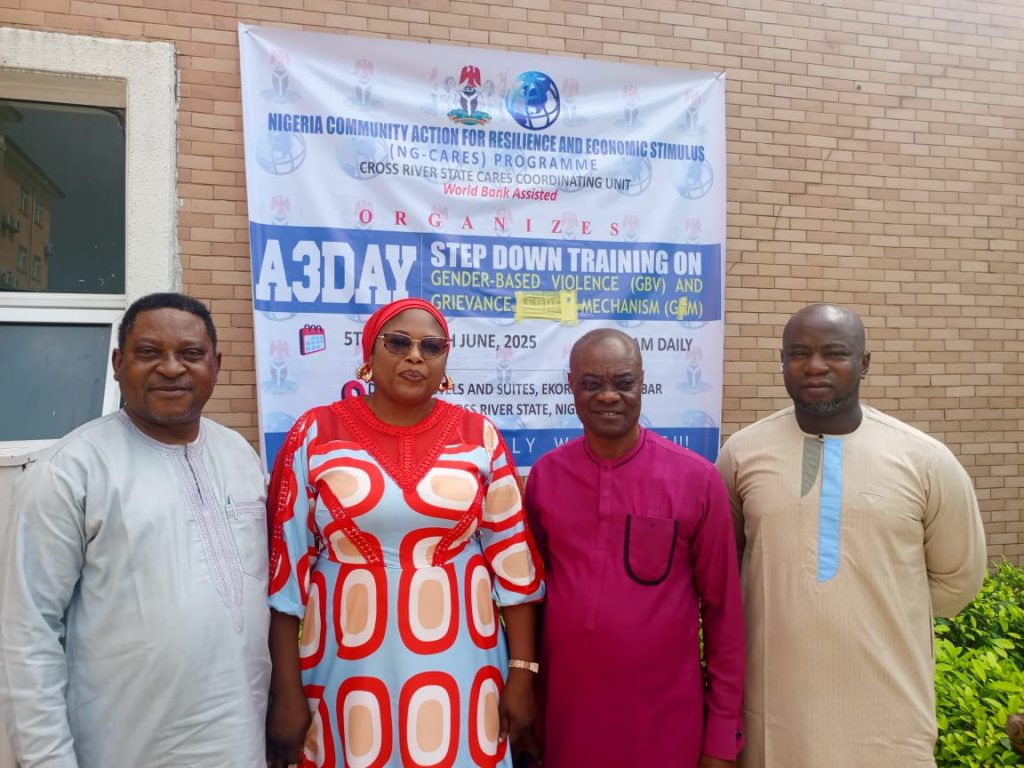
“This initiative reinforces our commitment to accountability, transparency, and the protection of vulnerable populations. We are not just ticking boxes—we are equipping key actors with tools to proactively prevent GBV and offer redress where harm has occurred,” Dr. Anake stated.
Delivering a presentation on the newly developed Grievance Redress Manual by the Federal CARES Support Unit (FCSU), Mr. Hannatu Simon, Lead Facilitator and Grievance Mechanism Officer, stressed that the manual provides actionable pathways for handling both general and sensitive grievances, particularly those related to Sexual Exploitation, Abuse, and Harassment (SEA/SH).
“The manual is a lifeline for victims and survivors. It outlines a clear, compassionate, and survivor-centered approach to redress, ensuring that grievance officers—from the State to the grassroots—are trained to listen, respond, and support with empathy and confidentiality,” Barr. Simon explained.
Also speaking, Dr. Chinyere Elendu, a respected FCSU Facilitator and gender advocate, lamented the widespread underreporting of GBV but expressed optimism in the growing momentum for change. She highlighted the importance of ongoing media engagement, sensitization campaigns, community dialogues, and capacity-building as key drivers for societal transformation.
The training brought together stakeholders from across sectors to build institutional capacity in preventing GBV, addressing community grievances, and promoting inclusive development.
Participants drawn from various ministries, local government councils, development platforms, security agencies, and civil society organizations praised the training as enlightening and impactful. They noted that the existence of robust legal frameworks, combined with targeted training and accessible grievance systems, is key to fostering safe communities and promoting social justice.
The technical sessions facilitated by leading gender experts covered a range of critical topics including the legal framework for grievance mechanisms under NG-CARES, World Bank guidelines on GBV, Sexual Exploitation and Abuse (SEA), and Sexual Harassment (SH), survivor-centered approaches and reporting channels, grievance handling procedures and referral pathways, as well as monitoring and evaluation of GBV response systems.
Interactive activities such as role play, class discussions, and real-life scenario simulations were also integrated into the training to foster practical learning and empathy-based responses.The event drew participation from a cross-section of society, including high-ranking government officials, traditional rulers, faith-based leaders, donor agencies, and gender champions—all united in the shared mission of eradicating gender-based violence and building a more just, equitable Cross River State.