Sam Erhunmwunsee, Asaba
Enter Title
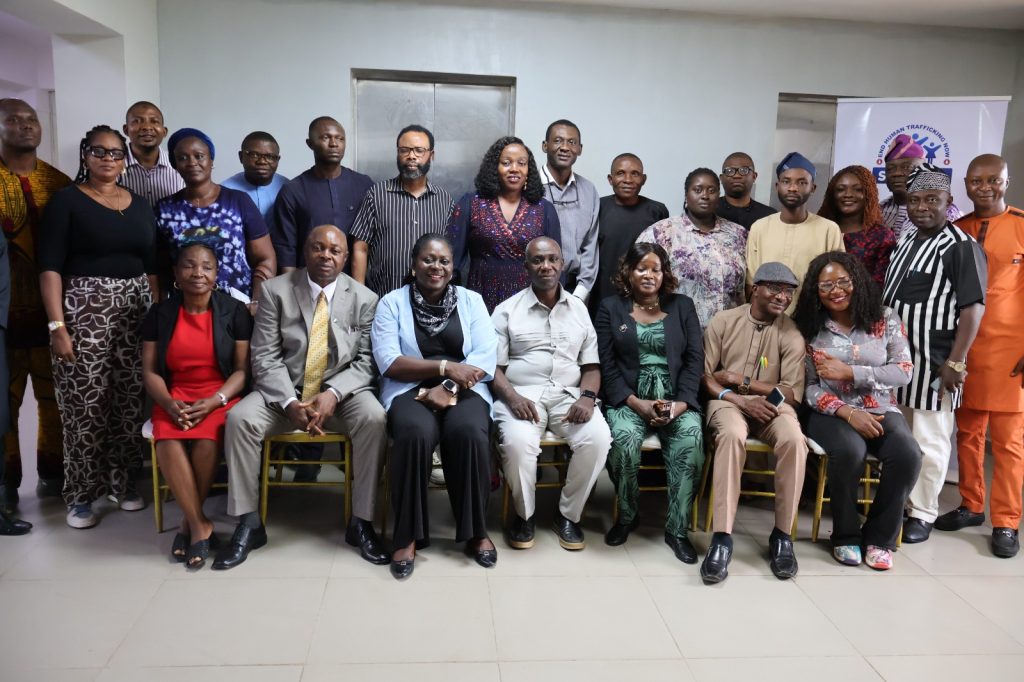
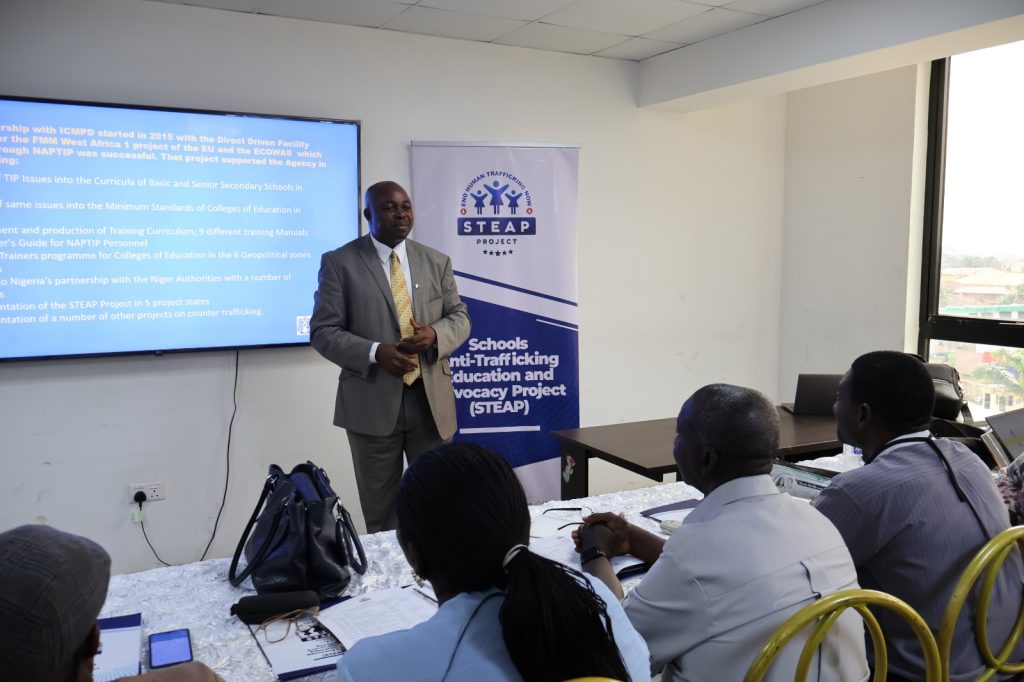
National Agency for Prohibition of Trafficking in Persons in collaboration with the International Centre for Migration Policy Development has trained over fifty persons drawn from media organisations, civil society organisations, NAPTIP Press Unit and ICMPD partners .
The training was geared towards achieving the Government of Netherlands funded School Anti-Trafficking Education and Advocacy Project (STEAP) project, aimed at exposing the media and the CSO on ethical reporting of Trafficking In Persons(TIP) without retraumatizing the survivors.
The workshop which held in Benin City, with the theme, “Ethical Media Reporting on Human Trafficking and Irregular Migration”, was attended by participants from Benue, Ogun, Enugu, Delta and Edo states
In a remark, the Director General of the National Agency for Prohibition of Trafficking in Persons, Hajiya Binta Adamu Bello said NAPTIP partnership with the ICMPD underscores the commitment to building the capacity of media partners, by exploring strategies for ensuring that media coverage upholds the dignity and rights of the survivors .
The NAPTIP Director General represented by the Benin Zonal Commander, Mr Sam Offiah expressed gratitude to the International Centre for Migration Policy Development (ICMPD), for its sustained support to the Federal Government of Nigeria through the National Agency for the Prohibition of Trafficking in Persons (NAPTIP) in the fight against human trafficking in the country.
Hajiya Bello stated , ”It is commendable that ICMPD, with the support of the Kingdom of the Netherlands, has continued to intervene with meaningful impact in some critical areas of counter trafficking projects ”
”On our part, as the focal Agency of the Government of Nigeria in combating issues of human trafficking, we shall continue to strengthen our collaboration with all state and non-state actors to eradicate human trafficking in the country. Specifically, we shall continue to scale up our strategies to increase the interception and rescue of survivals of human trafficking, improve partnership and policy implementation, increase enlightenment and awareness, and ultimately, ensure prosecution of offenders”
She emphasized that human trafficking and irregular migration remained pressing challenges in Nigeria, threatening the safety, dignity, and future of countless individuals.
Project Manager, International Centre for Migration Policy Development, Rhoda Dia-Johnson who described Journalists as not only conveyors of information; but also watchdogs, educators, and drivers of social change, noted that sensationalism, misreporting, and stigmatization of survivors could undermine awareness campaigns, delay survivor recovery, and even weaken national and international counter-trafficking efforts.
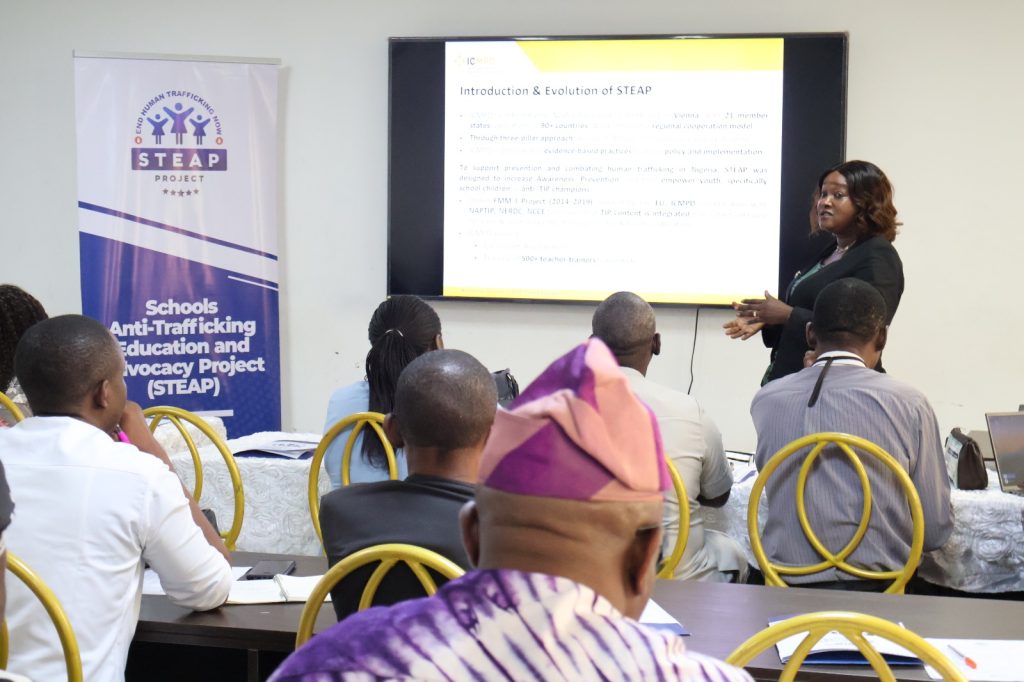
She explained that the essence of the workshop was to build participants capacity in two critical areas of Ethical Media Reporting and Monitoring, Evaluation and Learning, especially in strengthening the ability of the Schools Anti-Trafficking Education and Advocacy Project staff and CSO partners to track results, use evidence for learning, and improve programme implementation.
This, according to Dia-Johnson,ensures that interventions were not only visible but effective, accountable, and impactful.
Dia-Johnson expressed the hope that participants at the end of the workshop would leave with practical tools, stronger networks, and renewed commitment to ethical storytelling and evidence-driven programming, with a viewing to amplifying the voices of human trafficking survivors, foster collaboration among stakeholders, and ensure that Nigeria’s prevention, protection, and prosecution efforts were strengthened through accurate reporting and credible data.
While identifying Schools Anti-Trafficking Education and Advocacy Project as a potent tool for combating human trafficking in school community, Dia-Johnson
hinted that ICMPD as an NGO, was established in 1993 in Vienna with twenty one member states, and operational in over ninety countries.
She stated that STEAP was a four-year project that started last year , funded by the Government of Netherlands , to support Nigerian Government in preventing human trafficking in school community through awareness and capacity building of key stakeholders.
Dia-Johnson said STEAP was being implemented in five pilot states with high incidences of human trafficking which she highlighted to include Benue, Edo, Delta, Enugu and Ogun State.
According to the ICMPD Project Manager, two hundred and fifty schools were selected for the project, with fifty per state, and that over thirty five thousand students had been reached,with sixty percent females.
In a presentation on the Overview of Human Trafficking and Irregular Migration in Nigeria, the Press Officer of NAPTIP, Abuja, Mr Vincent Adekoye revealed that since its inception, NAPTIP had rescued over 22,000 survivors and secured over 750 conviction of traffickers in the country.
Mr Adekoye who hinted that those being trafficked were used for sex, hard labour, domestic servitude, ritual purposes and organ harvesting , highlighted poverty, low wages and lack of opportunities as some of the push factors.
He identified orphanage trafficking, Q-Net, Q-Link, Baby factories, Using victims for crimes, Crypto pregnancy, Fishing, Hunting, Adverts on non existing football clubs, using global sports, buying and selling of children as emerging trends in human trafficking .
The NAPTIP Press Officer urged journalists to do more investigative reporting in tracing and tracking illicit proceeds of traffickers, for forfeiture upon conviction by the court.
Participants at the workshop were exposed to various engaging and interactive sessions, including place of development journalism by Blessing Lass of ICMPD, Understanding Survival Centred Storytelling, Legal and Policy Frameworks against Trafficking in Persons: What Journalists should know by Sam Offiah, CSO Outreach and Media Partnership for Community Sensitization on Trafficking in Persons, by Favour Simeon among others
Some journalists and members of civil society organizations commended the organizers for the training, saying that they had been well equipped for better reportage of human trafficking activities without retraumatizing the survivors.
Sam Erhunmwunsee, Radio Nigeria Asaba