The National Human Rights Commission NHRC has reiterated its determination to approach the Supreme Court to reverse the judgement by the Appeal Court on the Environmental rights of Host Communities in the Niger Delta.
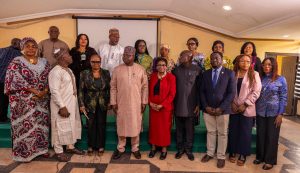
The Deputy Director of Legal, NHRC, Rivers State, Mrs Sarah Orage stated this at a public presentation of Legal-Policy Analysis Report, titled “Legal-Policy Gap Analysis of the Petroleum Industry Act, PIA and Mobilisation of Citizen’s Public Interest Advocacy, organised by a Non-governmental Organization, Human and Environmental Development Agenda, HEDA Resources Centre in Port harcourt.
Mrs Orage who represented the Coordinator of NHRC, Port Harcourt office, Mrs Chinwe Okoroji, noted that the judgement only denies the people the opportunity to exercise their rights which the commission is heading to the Supreme Court to contest the decision.
“When it comes to environmental issues, you have rights. Whenever there is rights we, the National Human Rights Commission, are there.
“Presently, the Court of Appeal, some months ago held that the Human Rights Commission does not have rights to entertain issues on oil spills and environmental pollution. If they said we don’t have the rights, who else should? As you see, the legal jurisprudence is trying not to reorganise the rights of the people, if they give this judgement.
“If you strip us of this right, you have directly, denied people their rights to justice. As we speak, we are approaching the Supreme Court and we hope that the Supreme Court will reverse that judgement. Else, the rights of the host communities to get justice will be hampered. For now, it will affect the well-being and welfare of the people.
“If this judgement is overturned, the Commission will do a lot. The commission cannot come all out if they have been stopped by this judgement” she stated.
Also speaking, the Deputy Speaker of the Rivers State House of Assembly, Mr. Dumle Maol noted that the PIA is mainly designed to benefit host communities and recommended some key facts that should be adopted for a transparent and accountable implementation of the Act.
” There are urgent need to strengthen regulatory frameworks and enforcement, promote local content and community engagement, more advocacy carried out and then enhance environmental protection and remediation amongst other ” Rivers State Deputy Speaker opined.
Earlier in an address of welcome, the Executive Secretary of HEDA, Mr Sulaimon Arigbabu, regretted that the government has introduced several laws and policies to address the rots in oil and gas industry, but implementation and enforcement remain a point of concern.
Mr Arigbabu, said the success of all the regulations and laws around the industry has always been impeded by weak enforcement, inadequate funding and community conflicts.
” Four years after the passage of the PIA, its impact is yet to be achieved”.
A resource person at the event, Mr. Celestine Akpobari while reviewing the report, described it as well researched article that gave an insight into Nigeria’s environmental governance in the Petroleum sector and stressed the need to bridge the existing gaps for the good of the host communities.
A Research Fellow, Mr. Alex Sewell while presenting analysis of Nigeria’s 2024 Regulations for the upstream petroleum Environmental Remediation Fund stated that Funds provided are inadequate to tackle the damage caused by oil spill in the Niger Delta Region.
The event featured a panel discussion where the panelists spoke extensively on oil and rights of the communities as well as the demand for real change in the host communities in the Niger Delta.