A group known as the United Nations Women Nigeria, has expressed commitment to supporting the Association of Women Living with HIV in Nigeria (ASWHAN) in accessing care and other services to ensure their well-being.
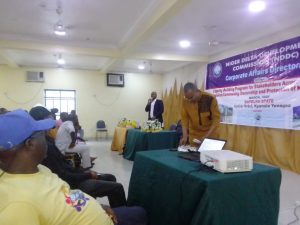
The Acting Deputy Country Representative of the group ,Mrs Patience Ekeoba, stated this in Asaba at a two-day advocacy training put together for members of the Association of Women Living with HIV in Nigeria, by the United Nations Women Nigeria
The group also pledged to help members of the Association of Women Living with HIV in Nigeria to participate in governance processes, not just within the HIV response but in the community generally.
Mrs Ekeoba said there was the need to prioritise domestic funding from government institutions, the organised private sector, foundations, and charity organisations to support the cause of women living with HIV.
She stated further, ”UN Women would continue to support ASWHAN’s efforts in convening various government, development partners, Civil Society Organisations (CSOs), private sector organisations, and well-meaning Nigerians in prioritising support for the association”
”Women living with HIV in Nigeria face significant challenges, including stigma, discrimination, and inadequate access to healthcare and social protection services”
Ekeoba said the essence of the training was to equip participants with the knowledge and skills needed to articulate and carry out effective advocacy for women living with HIV.
The country representative said the aim of the training was to enhance the participants advocacy skills and push for better services for women living with HIV.
She noted that the training was also designed to enable participants further understand the advocacy steps and strategies elaborated in the Community-Led Advocacy Toolkit developed by UN Women.
Ekeoba explained that the toolkit provided a practical framework for engaging in effective, grassroots-level advocacy.
According to her, participants are expected to develop state-specific advocacy action plans with clearly identified targets, timelines, and expected outcomes.
”UN Women is committed to supporting ASWHAN in promoting the rights and empowerment of women living with HIV.
”The advocacy training aims to enhance the knowledge and skills of participants in articulating and carrying out effective advocacy for women living with HIV.
”The training is part of a larger effort to support women living with HIV in Nigeria, including the development of a Community-Led Advocacy Toolkit, ” she said.
Ekeoba urged the participants to utilise the knowledge and skills gained from the training to advocate services that would improve the lives and livelihoods of women living with HIV and their families.
“No woman should be left behind, and it is through collective action and advocacy that we can work towards a more equitable and just society for all.
“The training is a critical step towards empowering women living with HIV in Nigeria.’’
In his remarks, the Delta Commissioner for Women Affairs, Community and Social Development, Princess Pat Ajudua, noted that advocacy was not just an option, but a necessity.
She was represented by the Director of Women Development and Gender Affairs at the ministry, Dr Faith Okpohworho.
According to Ajidua, social and health workers across Nigeria play a critical role in bridging the gap between policy and the people.
”Whether you are working in underserved communities, hospitals, Internally Displaced Persons Camps (IDP), correctional facilities, schools, or health outreach programmes, your impact cannot be overstated.
”That is why this training is so vital. It aims to sharpen your skills, strengthen your voice and position you as agent of transformation in your communities, she said.
The Resource Person, Martin Falana, engaged the participants on various topics including; introduction to advocacy and role of ASHWAN, identifying issues for advocating and developing an advocacy plan.
The Communication Officer for ASHWAN Delta,Mrs Dorcas Owhojero,
said the training had afforded her another opportunity to sharpen her skills in advocacy.
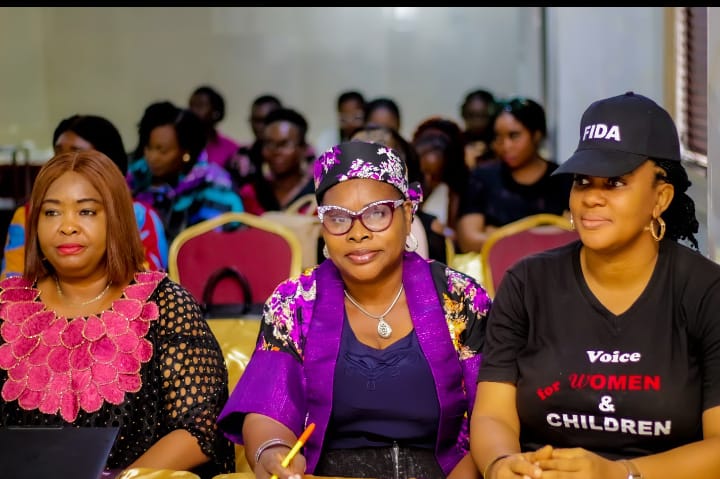
Some of the participants commended UN Women for the initiative, saying that the training had helped to build more confidence in them.
The training which featured the inauguration of Delta State Advocacy Committee, was attended by representatives from 18 states in Southern Nigeria.
Source: Sam Erhunmwunsee, Radio Nigeria Asaba