
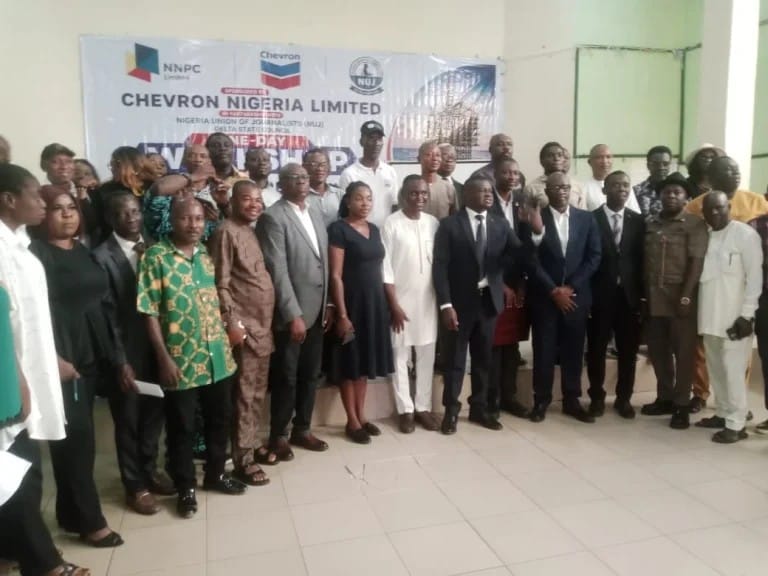
Chevron Nigeria Limited has expressed commitment to supporting initiatives that strengthen journalism and improve the quality of public discourse on oil and gas industry.
The company gave the charge in Asaba, Delta State, during a training programme organised in partnership with the Nigeria Union of Journalists (NUJ) for more than 50 journalists on professional reporting of the energy and oil and gas industry.
Speaking at the training, Chevron’s Manager of Communications and Chief Communications Officer for Chevron Businesses in Nigeria and Mid-Africa, Dr. Anyaegbudike Victor who represented the General Manager, Corporate Affairs, Oduselu Olusoga, said the company had sustained the capacity-building initiative for about 12 years because of the critical role journalists play in shaping public understanding of the energy sector.
He urged journalists covering the oil and gas industry to deepen their knowledge and analytical skills, warning that inaccurate reports on the sensitive sector could have far-reaching consequences for Nigeria’s economy and the global energy market.
The Chief Communication Officer for Chevron described the oil and gas industry as sensitive, complex and economically critical to Nigeria, stressing that developments in the sector could have implications for the entire country.
According to him, journalists reporting the industry must possess the capacity to analyse trends, provide informed perspectives to government and stakeholders, and produce reports that are objective, responsible and responsive.
Dr. Anyaegbudike said: “The oil and gas industry is a very sensitive industry. It is a very complex industry. It is also economically important and critical to Nigeria. What happens to the energy industry in Nigeria will affect the whole country entirely.”
The Chevron official said the company’s decision to partner with the NUJ and the Nigerian Association of Energy Correspondents was driven by the need to equip journalists with the knowledge required to properly understand and explain the complexities of the industry.
He described journalists as important agenda-setters whose reports could shape public opinion and influence decisions by investors and other stakeholders.
“Your role is very important to us. What you say can make or mar the industry,” he said, adding that developments in Nigeria’s energy sector could affect global markets.
He explained that because the oil and gas industry operates within a global market, reports about production challenges, disruptions or abandoned projects in Nigeria could influence investor confidence and the international stock market.
The Chevron manager therefore urged journalists to exercise professionalism and accuracy when reporting technical and commercial developments in the sector.
He noted that a report suggesting that a drilling programme had been abandoned, for instance, could send negative signals to investors, particularly because most oil and gas projects were financed with investors’ funds.
While commending Nigerian journalists for their contributions to national development
as critical partners in informing citizens and holding stakeholders accountable, Dr. Anyaegbudike said Chevron had been in Nigeria for more than 60 years .
He disclosed that Chevron commenced its structured partnership with academic institutions on energy journalism training in 2014, including collaboration with Pan-Atlantic University, as part of efforts to build a pool of journalists capable of providing accurate and informed coverage of the industry.
The training, he said, was ultimately aimed at ensuring that journalists could understand the technical, economic and policy dimensions of the oil and gas sector before reporting them to the public.
He called on participants to make effective use of the knowledge acquired during the programme, stressing that a well-equipped journalist would be better positioned to interrogate issues, analyse trends and hold stakeholders accountable without compromising professional standards.
The Chevron official also conveyed the goodwill of the company’s leadership, including its Managing Director and Chairman, Jim Swartz, and its General Manager and Chief Corporate Affairs Officer, Shoga Oduselu.
Chairman of the Nigeria Union of Journalists (NUJ), Delta State Council, Comrade Churchill Oyowe called for improved professional skills, accuracy and ethical standards in reporting Nigeria’s oil and gas industry.
Oyowe said the programme was particularly important given the central role of the oil and gas sector in Nigeria’s economy, energy security and national development.
He noted that journalists had a responsibility to provide the public with information that was accurate, balanced, credible and properly contextualised, stressing that such responsibility was even greater when reporting a technical and economically sensitive sector like oil and gas.
According to him, effective oil and gas journalism goes beyond the ability to write compelling stories, as journalists must understand the industry’s value chain, regulatory framework, environmental concerns, community relations, energy transition and the complex economic issues surrounding the sector.
He said the workshop was designed to deepen journalists’ understanding of the industry while sharpening their professional and ethical skills.
Oyowe expressed confidence that the lectures, interactive sessions and practical discussions would equip participants with better tools to ask relevant questions, interpret technical information and produce reports that promote informed public discourse.
The NUJ chairman commended Chevron Nigeria Limited for its commitment to professional development and constructive engagement with the media, while also appreciating NNPC Limited and the resource persons for their contributions to the success of the programme.
He urged participating journalists to actively engage the facilitators, ask questions and share their experiences, stressing that knowledge acquired from the workshop should translate into improved journalism and more responsible reporting of the oil and gas sector.
Oyowe reaffirmed the commitment of the NUJ Delta State Council to continuous capacity building for journalists, noting that a better-trained journalist was better positioned to serve the public interest and uphold the credibility of the profession.
He expressed appreciation to Chevron Nigeria Limited, NNPC Limited, the facilitators, guests and participating journalists, and wished participants a fruitful and rewarding workshop
has called for improved professional skills, accuracy and ethical standards in reporting Nigeria’s oil and gas industry.
The State Chairman of the Union, Comrade Churchill Oyowe, made the call on Monday, August 24, 2026, while welcoming participants to a one-day workshop on oil and gas reporting held at the NUJ Press Centre, Maryam Babangida Way, Asaba.
The workshop, organised in partnership with Chevron Nigeria Limited, was themed: “Enhancing Professional Skills and Ethical Standards in Oil and Gas Journalism.”
Oyowe said the programme was particularly important given the central role of the oil and gas sector in Nigeria’s economy, energy security and national development.
He noted that journalists had a responsibility to provide the public with information that was accurate, balanced, credible and properly contextualised, stressing that such responsibility was even greater when reporting a technical and economically sensitive sector like oil and gas.
According to him, effective oil and gas journalism goes beyond the ability to write compelling stories, as journalists must understand the industry’s value chain, regulatory framework, environmental concerns, community relations, energy transition and the complex economic issues surrounding the sector.
He said the workshop was designed to deepen journalists’ understanding of the industry while sharpening their professional and ethical skills.
Oyowe expressed confidence that the lectures, interactive sessions and practical discussions would equip participants with better tools to ask relevant questions, interpret technical information and produce reports that promote informed public discourse.
The NUJ chairman commended Chevron Nigeria Limited for its commitment to professional development and constructive engagement with the media, while also appreciating NNPC Limited and the resource persons for their contributions to the success of the programme.
He urged participating journalists to actively engage the facilitators, ask questions and share their experiences, stressing that knowledge acquired from the workshop should translate into improved journalism and more responsible reporting of the oil and gas sector.
Oyowe reaffirmed the commitment of the NUJ Delta State Council to continuous capacity building for journalists, noting that a better-trained journalist was better positioned to serve the public interest and uphold the credibility of the profession.
He expressed appreciation to Chevron Nigeria Limited, NNPC Limited, the facilitators, guests and participating journalists, and wished participants a fruitful and rewarding workshop.
Resource persons including Dr Patrick Edema, Senior Lecturer, DOU,Asaba; Mr Godfrey Ubaka, former Ag GM of The Pointer Newspapers; Mr Benjamin Binitie, retired DGM, DBS Asaba and the GM, Cruiz FM Asaba made presentations on various topics aimed at enhancing professional skills and ethical standards in oil and gas journalism.
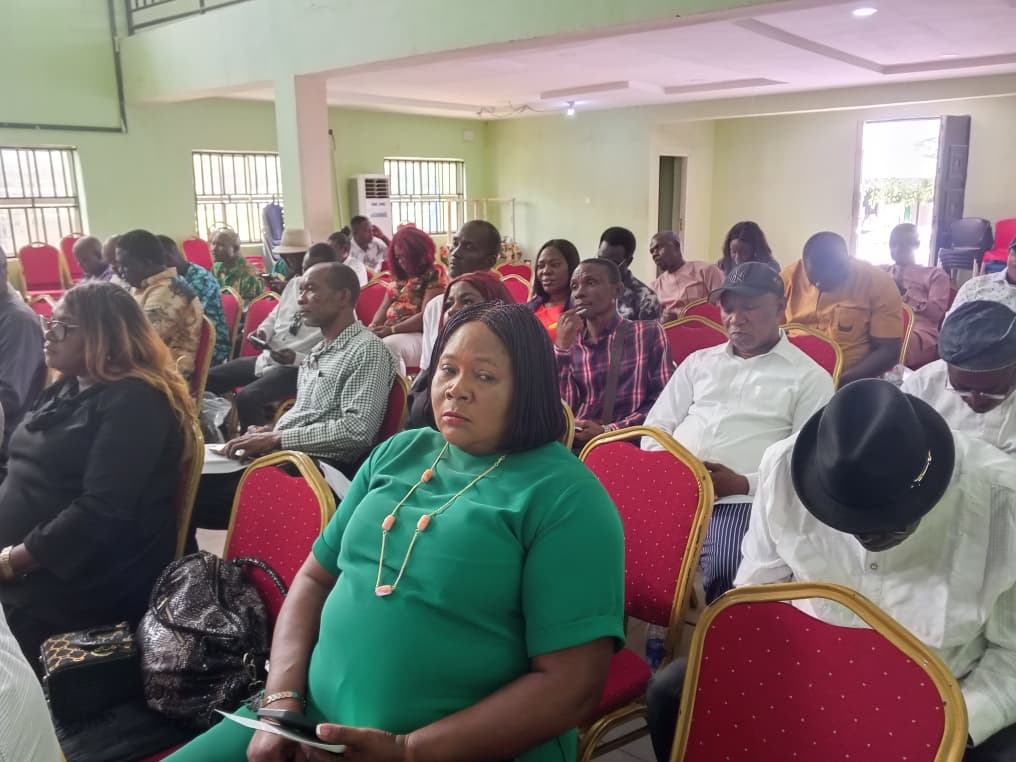
Participants at the workshop who were full of gratitude to the organisers and sponsors, said the training will enhance their reportage on the oil and gas industry.
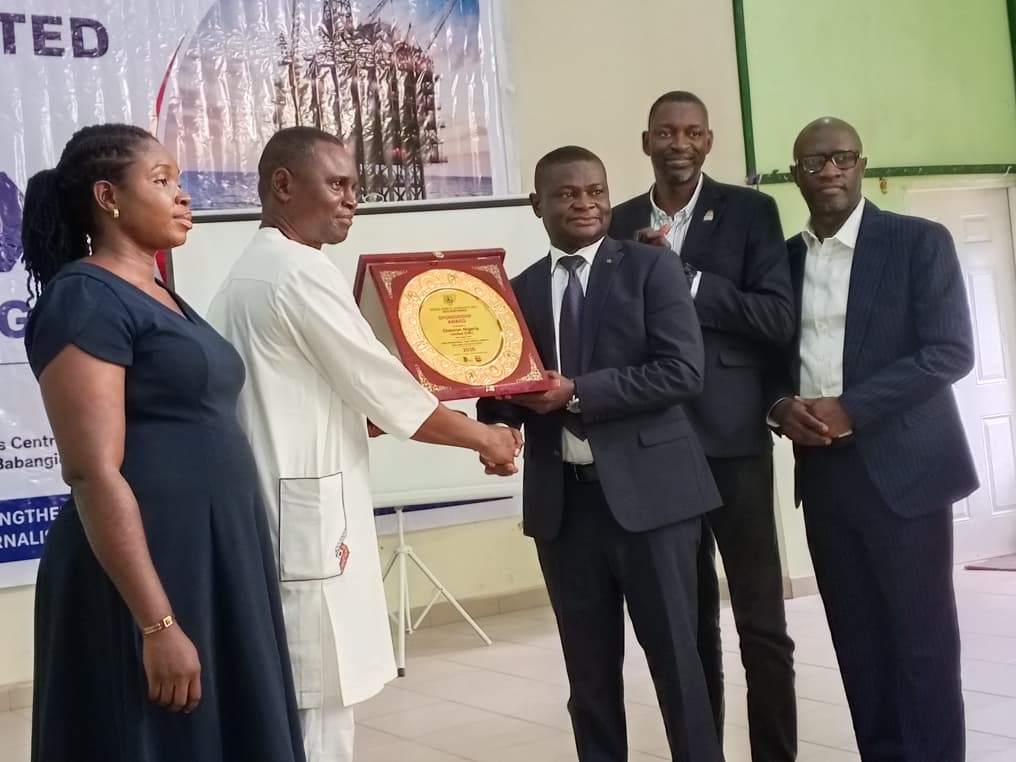
Highpoint of the workshop included presentation of certificates to participants and awards to Chevron Nigeria Limited and facilitators.