Social media has reduced the world into a Global village as predicted by a Canadian philosopher, Marshall McLuhan.
It has become an economic marketplace, political arena, emergency communication system and instrument of social mobilisation.
When Marshall McLuhan, a Canadian philosopher propounded the Global Village theory in the 1996, it sounded like a science fiction.
Today, Social media has not only made the world a global village, but a network of interconnected villages.
From a smartphone in Port Harcourt, one can learn a business skill from Lagos, order goods from China, and watch a live programme from London – all without leaving his room.
According to DataReportal, as of October 2025, Nigeria had about 48 million social media identities and over 109 million internet users.
This revolution has turned many people from mere consumers of information into creators and distributors.
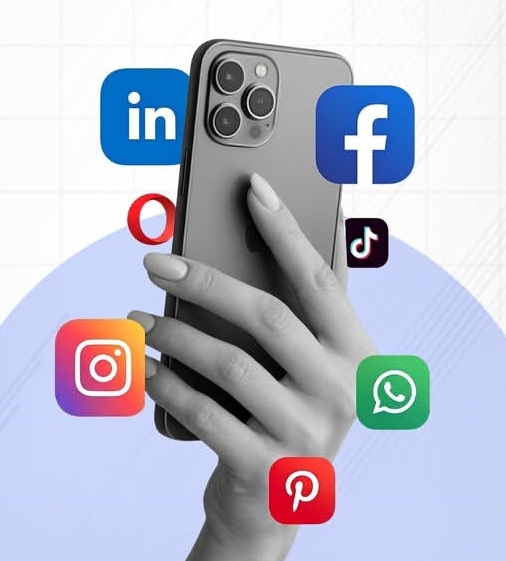
Platforms such as: Facebook, WhatsApp, Instagram, TikTok, YouTube, X, Telegram among others, have transformed communication from a predominantly one-way process into an interactive, participatory and networked system.
A digital expert, Mr. Eno Onun, says the shift has opened a goldmine of opportunities for young Nigerians.
According to him, content creation, digital advertising, influencer marketing, social media management and online consultancy have become viable careers, employing thousands.
“It has also improved businesses in the country and globally. Social media has lowered the barrier to start a business. Instagram, WhatsApp and Tiktok have become very important market places;
Employment as well and income opportunities.
Social media has created new occupations and streams of income in Nigeria, including Content Creation, Social media management, online consultancy “
But social media is not just about making money.
For many students, it is a second classroom.
Miss Favour Ndidi, a Law student at Rivers State University, describes it as an extension of the lecture hall.
“It helps me to collaborate with my fellow students in and out of the state. Through platforms such as WhatsApp, Instagram and Messenger, we are able to keep in touch, study in groups and share new ideas.”
The law student however admitted that social media can be a distraction sometimes, saying that there is need to strike a balance.
Similarly, an aspiring school leaver, Miss Princess Anih, who belongs to the Gen Z generation, describes social media as a community where peers connect, have fun, live-stream and learn.
“In terms of interaction, maybe a friend you have not seen in a while, go to WhatsApp, Facebook, Instagram, you can either do a video call or send a message.
Or maybe, you are bored and you just want to have fun with your phone, you can go to Tiktok, YouTube, and watch some videos. And on education, you can visit some study Apps”.
But the digital village has its dark side.
Behind the screens lies a growing menace of fake news, misinformation, cyberbullying and cyberstalking.
A lawyer , Mr. Nelson Abali, warns that the law is not blind to such offences.
He notes that under Section 24 of the Cybercrimes Prohibition, Prevention and Amendment Act, 2024, offenders risk three to ten years imprisonment or fines between seven and twenty-five million naira.
“Don’t be overtaken by the excitement to make a post about everything you see or hear. Before you post or repost, you must verify and be sure, that the information is correct.”
Mr. Abali’s advice is simple: think before you post because as useful as social media has become, it is important to play by the rules to avoid the long arm of the law.