The Federal Government has reaffirmed its commitment to supporting credible investments and creating a business-friendly environment across the country, assuring investors that Nigeria remains open for enterprise, industrial growth and sustainable economic development.
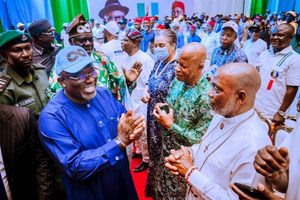
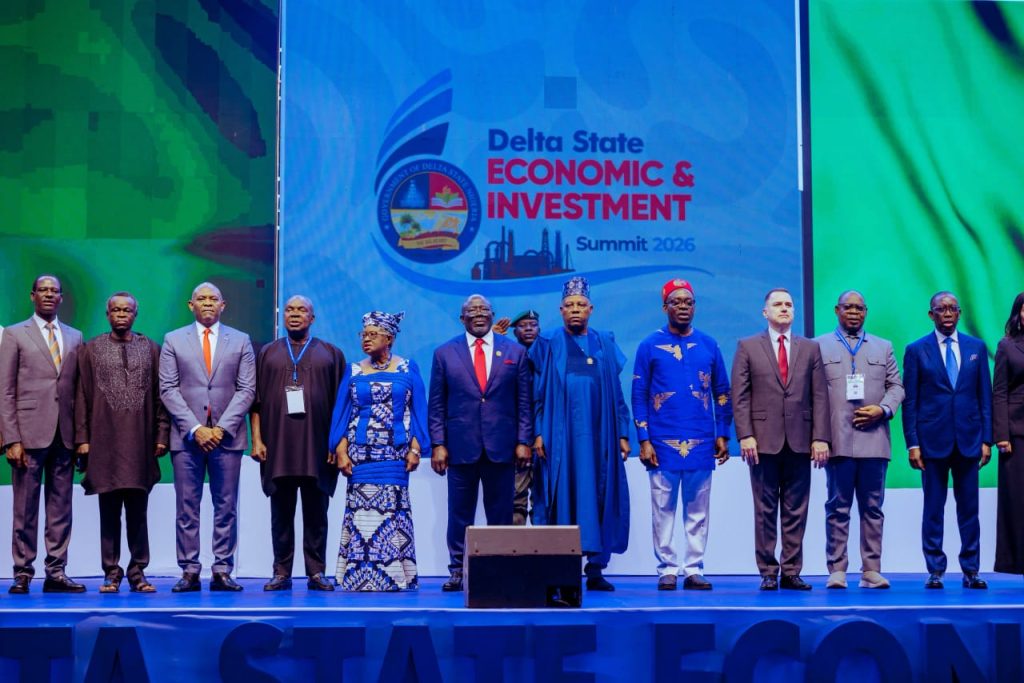
Vice President Kashim Shettima gave the assurance in Asaba at the Delta State Economic and Investment Summit, where he said the administration of President Bola Tinubu would continue to implement reforms that strengthen institutions, remove barriers to doing business and encourage private sector participation in the economy.
Addressing local and international investors, the Vice President said states that create investment-friendly environments would continue to enjoy the support of the Federal Government, stressing that healthy competition among states to attract investments would generate employment, expand economic opportunities and improve the quality of life of Nigerians.
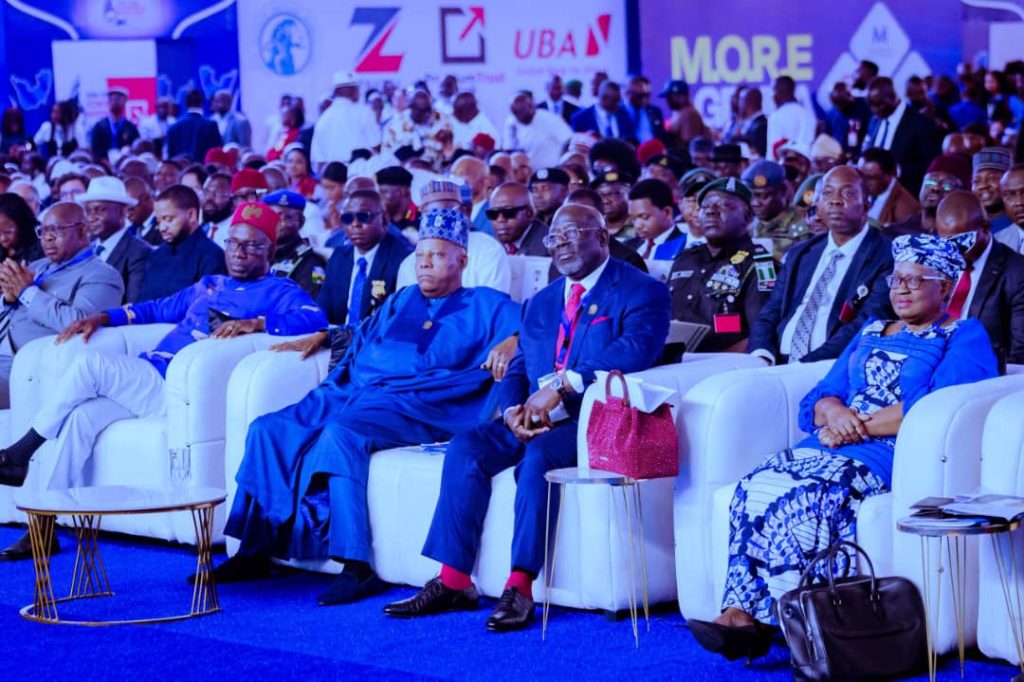
“The race among states should not be about politics but about attracting investments, creating employment, promoting prosperity and restoring human dignity,” he said.
Shettima noted that the Tinubu administration had consistently engaged investors through economic summits, policy dialogues and investment forums aimed at positioning Nigeria as a preferred investment destination.
He said ongoing economic reforms had begun yielding tangible results, revealing that Nigeria had recorded a significant rebound in investor confidence, with foreign reserves rising to about 52 billion dollars following increased capital inflows.
“When this administration came into office, the country faced severe capital flight. Today, we are witnessing capital inflows, with our foreign reserves rising to about 52 billion dollars and still growing. The President deserves commendation, not condemnation,” he stated.
According to him, Nigeria’s improving economic outlook has also earned international recognition, noting that Fitch Ratings upgraded the country’s credit outlook in April 2025, while S&P Global Ratings improved Nigeria’s rating in 2026 on the strength of stronger external reserves, improved fiscal discipline and sustained reforms.
“Nigeria is regaining credibility, and the best time to invest is before opportunities become expensive,” he added.
The Vice President urged investors to take advantage of emerging opportunities across the country, emphasizing that every state possesses unique comparative advantages in sectors such as agriculture, solid minerals, energy, technology and manufacturing that can drive national development.
Speaking specifically on Delta State, Shettima described the state as one of Nigeria’s most promising investment destinations, citing its strategic location, extensive coastline, abundant gas reserves, power infrastructure, refineries, industrial corridors, agricultural potential, aquaculture resources, solid minerals and highly skilled workforce.
He stressed that the state’s future must extend beyond dependence on crude oil, noting that economic diversification remains the pathway to sustainable prosperity.
“Potential has no economic value unless it is organised, financed and put to productive use,” he said.
The Vice President commended Governor Sheriff Oborevwori for convening the investment summit, describing it as a practical platform for connecting investors, entrepreneurs, development institutions and policymakers.
He also praised the governor’s leadership, humility and commitment to transforming Delta State, saying his development vision aligns with the Federal Government’s broader agenda of building a stronger and more prosperous Nigeria.
“I am very proud of you, Your Excellency. I am proud of your humility and, most importantly, your commitment to building a greater Delta State,” Shettima said.
In a keynote address, the Director-General of the World Trade Organization (WTO), Dr. Ngozi Okonjo-Iweala, challenged the Delta State Government to take advantage of emerging global economic opportunities by accelerating industrialisation, strengthening infrastructure, embracing digital technology and expanding value-added production to position the state as one of Nigeria’s foremost investment destinations.
Okonjo-Iweala said the rapidly evolving global economy presents enormous prospects for states that are prepared to compete through sound policies, strategic investments and efficient institutions.
She commended Governor Sheriff Oborevwori for what she described as action-oriented leadership, particularly the unveiling of a 100-million-dollar Viability Guarantee Fund designed to reduce investment risks and attract private capital.
“I came because you are a governor who takes action. The announcement of the 100-million-dollar investment fund is exactly the kind of initiative we need to attract investors and stimulate economic growth,” she said.
The WTO chief also welcomed investors, entrepreneurs, development partners and diplomatic representatives from Brazil, Malaysia, China and other countries, describing their participation as a strong endorsement of Delta State’s growing investment profile.
Despite global economic uncertainties arising from geopolitical tensions, rising tariffs, climate change and technological disruptions, Okonjo-Iweala said global trade continues to offer significant opportunities for economies that are ready to adapt.
She disclosed that global trade in goods and services reached a record 34.6 trillion dollars last year, while Africa’s merchandise exports expanded by more than 10 per cent, driven largely by minerals, metals and agricultural products.
“Despite global uncertainty, trade has remained resilient. That means opportunities still exist for Delta State, Nigeria and Africa. The question is whether we are ready to seize them,” she said.
According to her, the ongoing diversification of global supply chains—described as “re-globalisation”—is encouraging companies to establish production in new locations, creating fresh opportunities for emerging economies like Nigeria.
She observed that Delta State possesses the natural and economic assets required to become one of Nigeria’s leading industrial hubs, citing its abundant natural gas, coastline, seaports, solid minerals, fertile agricultural land, quality educational institutions and sound fiscal position.
Commending the state’s prudent financial management, Okonjo-Iweala noted that fiscal discipline remains a critical foundation for sustainable development.
“Fiscal discipline is extremely important. Without it, it will be difficult to build the Delta State we all want,” she stated.
She, however, stressed that development depends not only on abundant resources but on effective implementation, strong institutions, infrastructure maintenance and clear economic priorities.
“What matters is execution. Development comes from proper implementation, maintenance of infrastructure, strong institutions and clear priorities,” she added.
The former Minister of Finance urged the state government to prioritise the development of world-class Special Economic Zones, describing them as proven catalysts for industrial growth, job creation and export expansion.
She explained that successful industrial parks require reliable electricity, quality road and rail networks, water supply, digital infrastructure and efficient regulatory services, urging Delta State to collaborate closely with the Federal Government in providing the necessary infrastructure.
Okonjo-Iweala encouraged state officials to understudy successful industrial zones such as the Lekki Free Zone in Lagos and the Glo-Djigbé Industrial Zone in the Republic of Benin, noting that both have generated thousands of jobs by providing the right environment for businesses to flourish.
Rather than spreading investments across numerous sectors, she advised the state to concentrate on two or three agricultural value chains where it enjoys a comparative advantage.
“It is not enough to produce crops. You must process them, improve quality, meet international standards, provide financing and connect producers to markets,” she said.
She explained that value addition would significantly increase exports, create more employment opportunities and generate higher incomes than exporting raw agricultural produce.
The WTO Director-General also identified Delta State’s coastline, rivers and seaports as untapped economic assets capable of driving Nigeria’s blue economy.
She noted that Nigeria spends nearly one billion dollars annually importing fish and fish products despite its vast aquatic resources, urging Delta State to invest aggressively in aquaculture, fish processing, cold-chain facilities, marine logistics and sustainable fisheries management.
“We should not continue spending huge amounts importing fish when states like Delta have the natural resources to produce them locally,” she said, while cautioning against illegal and unsustainable fishing by foreign trawlers.
Okonjo-Iweala further called for greater investment in gas infrastructure to support industrialisation, noting that Delta’s abundant natural gas should power factories, industrial parks and electricity generation.
She also emphasised the importance of digital infrastructure and artificial intelligence, describing them as indispensable tools for competing in the future global economy.
“The future of global trade is increasingly digital. Young people and women are already participating in the digital economy, but they need reliable internet connectivity and modern infrastructure,” she said.
She urged Delta State to look beyond Nigeria’s domestic market and position itself to benefit from the African Continental Free Trade Area (AfCFTA), saying Africa’s economic integration, shifting global supply chains and Nigeria’s ongoing reforms have created a rare window of opportunity.
“The opportunities are here. What remains is for Delta State to prioritise, execute and compete for global investments,” she said.
Expressing confidence in the state’s economic future, Okonjo-Iweala said Delta could emerge as one of Nigeria’s leading industrial centres if it sustains prudent fiscal management and continues to create an enabling environment for investors.
Delta State Governor, Sheriff Oborevwori described Delta as an investor’s haven with an estimated six million residents, abundant mineral resources, fertile agricultural land, a growing infrastructure base and a business-friendly environment, noting that the state’s economy is valued at approximately ₦17 trillion (US$12.34 billion).
The governor said his administration is pursuing a private sector-driven, data-based economic model under the MORE Agenda, with emphasis on diversification, job creation, industrialisation and sustainable development.
To improve the investment climate, Oborevwori highlighted key reforms, including the establishment of the Delta State Ease of Doing Business Council and incentives such as waivers on tenement rates, fees and levies for up to five years for qualifying investors.
He disclosed that over 12,000 hectares of farmland have already been earmarked for commercial agricultural investments, while the state’s 163-kilometre coastline offers enormous opportunities in the marine economy.
He declared that Delta State is open for business, unveiling a US$100 million (₦137.8 billion) Viability Gap Funding initiative to de-risk private investments and accelerate industrialisation across the state.
Governor Oborevwori said the fund demonstrates his administration’s commitment to ensuring that agreements reached at the summit translate into tangible projects and economic growth rather than remaining mere promises.
According to him, the summit marks the culmination of investment engagements that began with official trade and investment missions to China and Brazil in 2025, aimed at attracting strategic partnerships capable of unlocking Delta State’s vast economic potential.
Oborevwori assured investors that the summit was designed to connect innovative ideas with capital, foster strategic partnerships and position Delta as one of Nigeria’s most competitive investment destinations.
Chairman of the summit, an engineer , Austin Avuru, urged Delta State to reduce its dependence on crude oil and build a diversified economy capable of surviving long after oil resources are exhausted.
He said countries such as Norway, Saudi Arabia and the United Arab Emirates had successfully used oil wealth to develop other sectors of their economies, stressing that Delta should learn from their experiences.
According to Avuru, government should focus on creating an enabling environment that would attract private sector investment through improved infrastructure, security and ease of doing business.
He called for the dredging of waterways linking Escravos, Warri and Forcados ports to boost maritime trade, while urging the government to maintain roads connecting ports, industrial zones and farming communities.
Guest Speaker at the summit, Professor Patrick Lumumba, a renowned Kenyan scholar, and Pan-Africanist, called on Delta State and Nigeria to look beyond oil and embrace innovation, research, energy development and stronger African partnerships as pathways to sustainable growth.
He said while Africa often boasts about its population of over 1.4 billion people, the real question is how the continent is harnessing that huge population for development.
“We are quick to say that Africa has 1.4 billion people, but what are we doing with that population? Many young Africans are risking their lives trying to cross into Europe because opportunities are lacking at home,” he said.
Lumumba commended Delta State for identifying its strengths in oil, agriculture, minerals, the blue economy and other sectors, stressing that true development would depend on how effectively those resources are managed.
Referring to Norway’s successful management of oil wealth through a sovereign wealth fund, he urged Delta State and Nigeria to learn from global best practices.
“You are one of the leading oil-producing states in Nigeria. The question is not whether you have resources, but how you use those resources to secure the future,” he said.
The scholar noted that Delta State’s economy is larger than that of more than 20 African countries, saying such enormous potential should translate into higher living standards and economic prosperity.
He urged leaders to focus on sectors that would define the future, including technology, artificial intelligence, agriculture, pharmaceuticals and the blue economy.
There were goodwill messages from the Minister of Finance and Coordinating Minister of the economy, Professor Taiwo Oyedele, Brazil Ambassador to Nigeria, among others.
The theme of the 3-day Delta State Economic and Investment Summit 2026 is : Harnessing Our Strengths, Unlocking Our Potentials.