…targets AI, smart agriculture, blue economy partnership
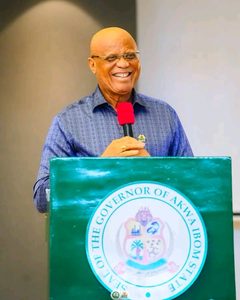
Governor of Akwa Ibom State, Pastor Umo Eno, has called for stronger economic and technological cooperation between Nigeria and South Korea, urging Korean investors to see the state as a strategic destination for investment, technology transfer and industrial development.
Governor Eno made the call in Uyo while receiving the South Korean Ambassador to Nigeria, Ambassador Jeong Yo-an, who delivered a special lecture at the University of Uyo on Artificial Intelligence, smart agriculture and blue economy development.
Represented by his Deputy, Senator Akon Eyakenyi, the Governor said Akwa Ibom’s vast natural resources, growing human capital and strategic location placed it in a strong position to deepen the existing economic relationship between Nigeria and South Korea.
He noted that with Nigeria–South Korea trade estimated at more than two-point-one billion dollars, Akwa Ibom was seeking to become an active participant in the relationship by attracting Korean expertise, industries and investment into the state.
“Our State can benefit from the well-known South Korean technology, manufacturing prowess and first-rate products,” Eno said, urging the Ambassador to give serious consideration to the investment opportunities available in Akwa Ibom.
The Governor identified Artificial Intelligence, technology, manufacturing, agriculture and the blue economy as areas with enormous potential for mutually beneficial cooperation.
He said the focus of the lecture was particularly relevant to his administration’s development agenda, stressing that the rapid advancement of Artificial Intelligence had made digital skills and technological literacy indispensable to the future of young people.
According to him, the Youth Development Centres established across the state’s 31 Local Government Areas are designed to equip young people with digital, entrepreneurial and vocational skills, while creating pathways for innovation, employment and economic empowerment.
On agriculture, Governor Eno described the sector as a major pillar of the ARISE Agenda, highlighting the establishment of model farms, support for farmers and the Tree Crop Revolution as key interventions aimed at strengthening food security and developing export-oriented agriculture.
He expressed optimism that the programme would reposition Akwa Ibom as a major player in the oil palm value chain, with the ultimate objective of making the state a net exporter of palm oil.
The Governor’s push for smart agriculture also aligns with the broader Korean development experience, where technology, rural development and human-capital development have featured prominently in Korea’s international cooperation programmes. Yeungnam University, for instance, continues to run international programmes based on the Saemaul development model.
Turning to the maritime sector, Governor Eno said Akwa Ibom’s approximately 129-kilometre coastline, rivers, waterways and proximity to the Atlantic Ocean presented significant opportunities for investment in the blue economy.
He cited the multi-billion-naira maritime hub project at Oron Beach, security interventions and other government initiatives as deliberate steps towards unlocking the state’s maritime potential.
Beyond infrastructure, he said the objective was to use the maritime sector to create jobs, strengthen security, stimulate commerce and attract investment.
Governor Eno also described the Ambassador’s visit as strategic, expressing optimism that it would usher in a new phase of economic, technological and institutional cooperation between South Korea, Akwa Ibom and Nigeria.
In his lecture, Ambassador Jeong Yo-an emphasised the importance of strong institutions and human capital in achieving sustainable development.
Drawing lessons from South Korea’s transformation from poverty to prosperity, the Ambassador highlighted the philosophy of diligence, self-help and cooperation, associated with the country’s Saemaul Undong development movement.
The Korea Saemaul Undong Center describes the model as a community-development approach built around improving quality of life through self-reliance, cooperation and community participation.
The Ambassador therefore urged Nigerians to draw lessons from Korea’s development experience and remain committed to building institutions and investing in people.
“The real resources are people, strong institutions and patience. The story of the next 50 years is yours to write, and South Korea will help you to write.”
The Korean Embassy’s current activities also show an increasing emphasis on digital and innovation capacity in Nigeria, including a 2026 Start-up Digital Innovation Academy initiative designed to equip Nigerian youths, start-ups and MSMEs with digital and entrepreneurial skills.
Earlier, the Vice Chancellor of the University of Uyo, Professor Christopher Ekong, commended the Eno administration for its support to the institution and welcomed Korea’s growing interest in Nigeria and Akwa Ibom.
Ekong called for deeper collaboration between the university and South Korean institutions, particularly in Artificial Intelligence, digital transformation and smart agriculture.
He appealed for support towards establishing and upgrading ICT centres, providing modern digital infrastructure and developing skills-acquisition centres equipped with contemporary facilities and technical expertise.
The Pro-Chancellor and Chairman of the University Governing Council, Dr Muiz Banire, SAN, and former Deputy Governor of Akwa Ibom State, Obong Nsima Ekere, also advocated stronger collaboration among South Korea, the University of Uyo and the state.
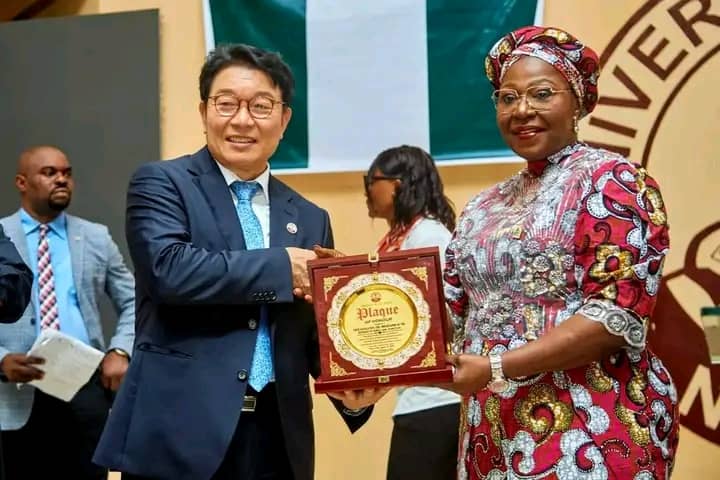
The event ended with the presentation of a commemorative plaque to Ambassador Jeong Yo-an by the University of Uyo.
The emerging message from the engagement is clear: Akwa Ibom is seeking to move beyond conventional diplomatic relations with South Korea towards practical partnerships capable of transferring technology, developing human capital, modernising agriculture and unlocking the state’s maritime economy.