Akwa Ibom State Governor, Pastor Umo Eno, has described the ongoing Ibom International Hospital as a strategic investment in the future of healthcare in the state, expressing confidence that the facility will emerge as one of the finest medical centres in Nigeria.
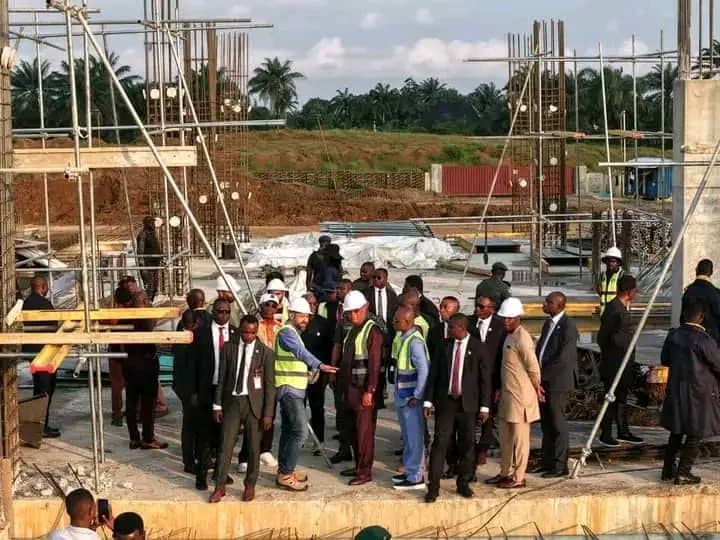
The Governor spoke during an unannounced inspection of the project, barely two months after its groundbreaking, where he met the Commissioner for Health, contractors, consultants, doctors and other professionals actively engaged at the site.
Impressed by the presence of the project team and the progress of construction, Governor Eno said the level of activity at the site was evidence that the project was receiving the attention required to meet its delivery target.
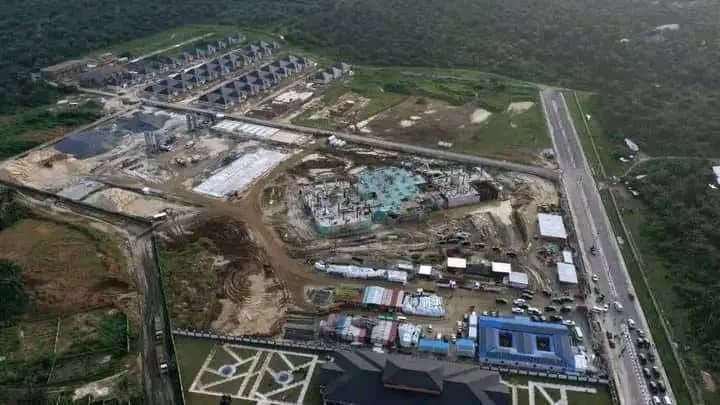
He said the facility was being designed to serve not only Akwa Ibom but also patients from across the South-South region and Nigeria.
“I believe we will meet up. I believe we will deliver for the Akwa Ibom people a world-class medical facility.”
Beyond the physical infrastructure, the Governor drew attention to the need for residents to prepare financially to access the sophisticated services the hospital will provide.
He made a passionate appeal for greater enrolment in health insurance, warning that advanced medical procedures, including major surgeries, could impose devastating financial burdens on families when patients are required to pay entirely out of pocket.
According to him, insurance provides a mechanism for spreading the cost of healthcare and ensuring that residents can access treatment when the need arises.
“The only way a lot of us would benefit is if we have insurance… if we take out insurance policies, it will help us reduce the bill.”
Governor Eno said the state would continue to encourage residents to embrace health insurance, stressing that the objective was to make it a widely accepted practice rather than wait until residents were compelled to participate.
He linked the call directly to the administration’s investment in healthcare, saying the construction of world-class facilities must go hand-in-hand with measures that enable the people to use them.
The Governor also pointed to the hospital’s cancer treatment and diagnostic capacity as particularly important, noting that late diagnosis remains a major challenge in cancer management.
He said residents would have greater opportunities to undergo routine medical checks, detect illnesses early and receive appropriate treatment without travelling abroad.
For Governor Eno, the project represents a deliberate attempt to “walk into the future”, arguing that governments must build infrastructure ahead of emerging needs rather than wait until existing facilities become inadequate.
The Commissioner for Health, Dr Ekem John, disclosed that the project was developed through extensive consultation with the medical community, including 25 health-sector unions.
He said about 40 consultants drawn from various specialties and institutions participated in the needs assessment and planning, with international experts also contributing.
The Commissioner maintained that the facility had no exact equivalent in the country, given the combination of services and solutions incorporated into its design.
Construction officials, meanwhile, said work was progressing around the clock, with three major wings being handled simultaneously by separate teams.
The project coordinator disclosed that although June had been set as the delivery target, the construction team was working to beat the deadline.
Structural Engineer Mohammed Bita explained that the independent development of the three wings would enable the project to advance rapidly, with significant structural changes expected within weeks.
As the hospital rises, however, the broader challenge remains clear: building the facility is only one part of the healthcare equation. Making quality care financially accessible is equally important.