The Chairman of the Federal Civil Service Commission (FCSC), Prof. Tunji Olaopa, has identified an efficient, accountable and technology-driven Civil Service as critical to achieving Nigeria’s target of building a $1 trillion economy by 2030.
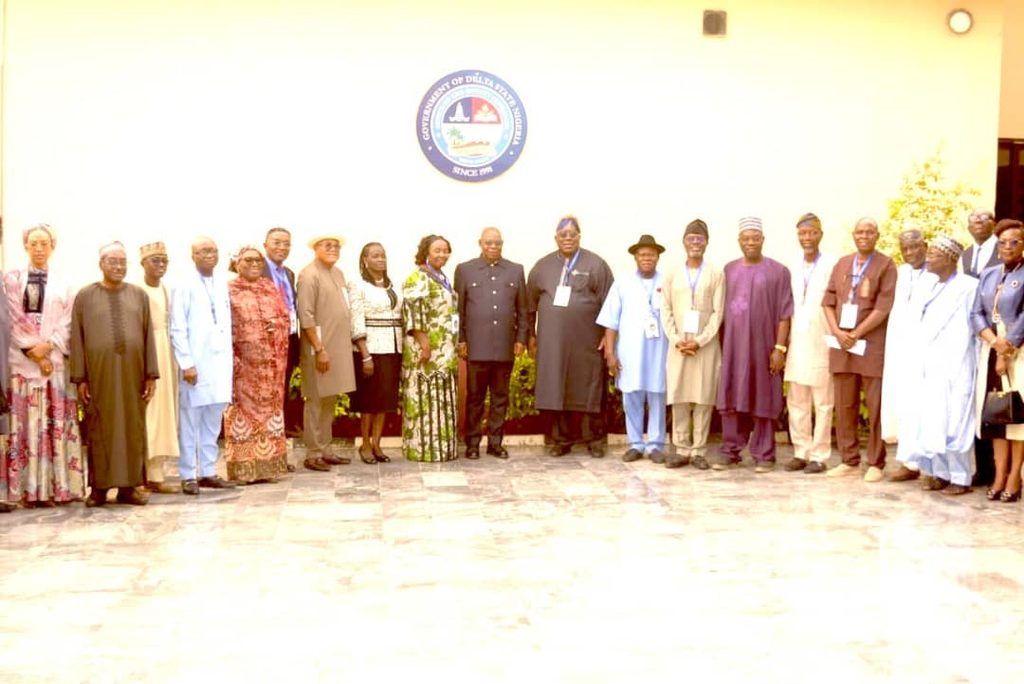
Olaopa made this known in Asaba, Delta State, when he led Federal Commissioners, as well as Chairmen and Members of State and FCT Civil Service Commissions, on a courtesy visit to the Deputy Governor, Sir Monday John Onyeme, at Government House.
The visit formed part of activities marking the 45th National Council of the Civil Service Commissions of the Federation.
The FCSC Chairman stressed that the Federal Government’s Renewed Hope Agenda and its economic aspirations would remain difficult to realise without a Civil Service equipped with the capacity to deliver effective policies, drive innovation and ensure accountability.
He disclosed that the Commission was strengthening policy intelligence, managerial capacity and bureaucratic efficiency, with particular emphasis on technology adoption and accountability to Nigerians.
According to him, the FCSC has developed a strategic plan aimed at improving the organisational intelligence and performance of the Federal Civil Service, which all 36 states of the federation signed onto last year.
He said the Commission was currently conducting a baseline assessment to establish the level of implementation by State Civil Service Commissions over the past year.
Olaopa added that incentives would be introduced to identify and support pilot champions capable of driving the implementation of the strategic plan across the federation.
Reflecting on the history and mandate of the Civil Service Commission, he explained that the institution, first conceived in Britain in 1853, was established to promote and protect merit in public service, while also ensuring the implementation of the Federal Character principle.
He, however, identified several challenges confronting the Civil Service, including difficulties in enforcing merit-based recruitment and promotion, competition with the private sector for skilled professionals, generational transition and wage-related concerns.
The FCSC Chairman commended the Delta State Government for implementing the new minimum wage, describing the move as a morale booster for workers and an example of putting employee welfare at the centre of public service reforms.
In his response, the Delta State Deputy Governor, Sir Monday John Onyeme, welcomed the delegation and assured members of the State Government’s continued support and hospitality throughout the three-day National Council meeting.
Onyeme also commended the FCSC for selecting Delta State to host the meeting, while acknowledging the Commission’s leadership in championing reforms designed to reposition the Civil Service for improved efficiency and service delivery.
Sam Erhunmwunsee, Radio Nigeria Asaba