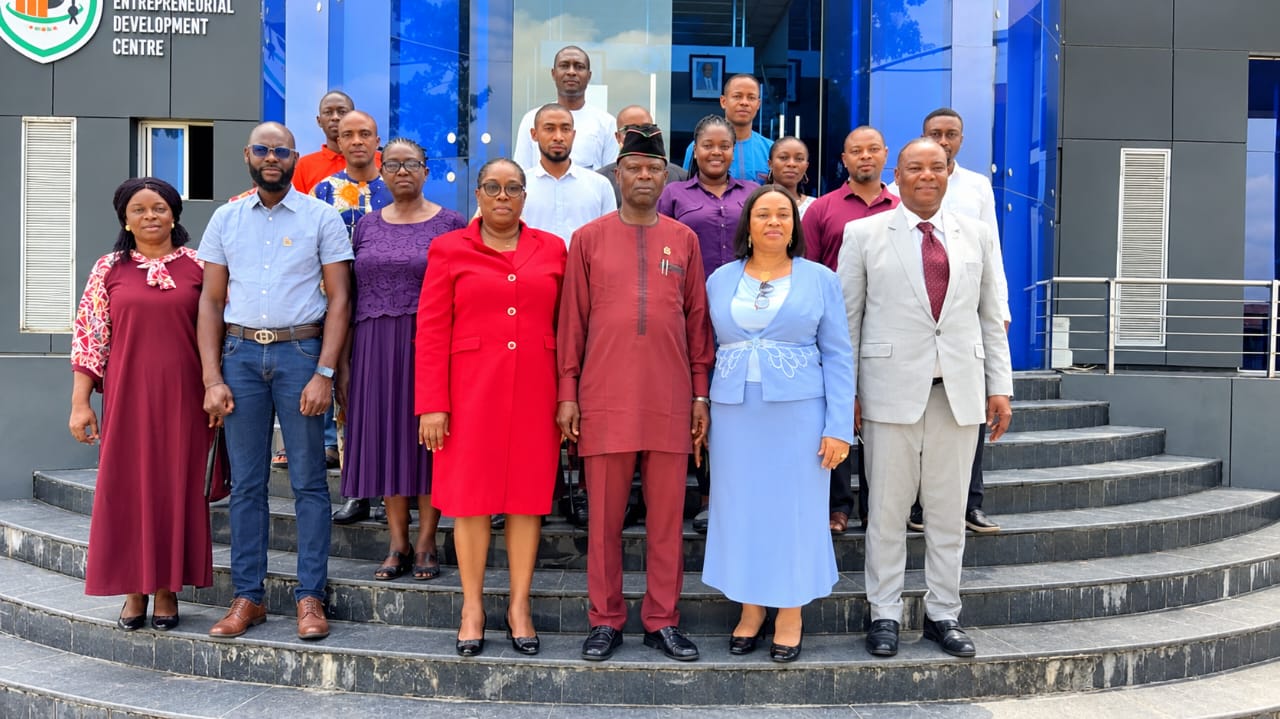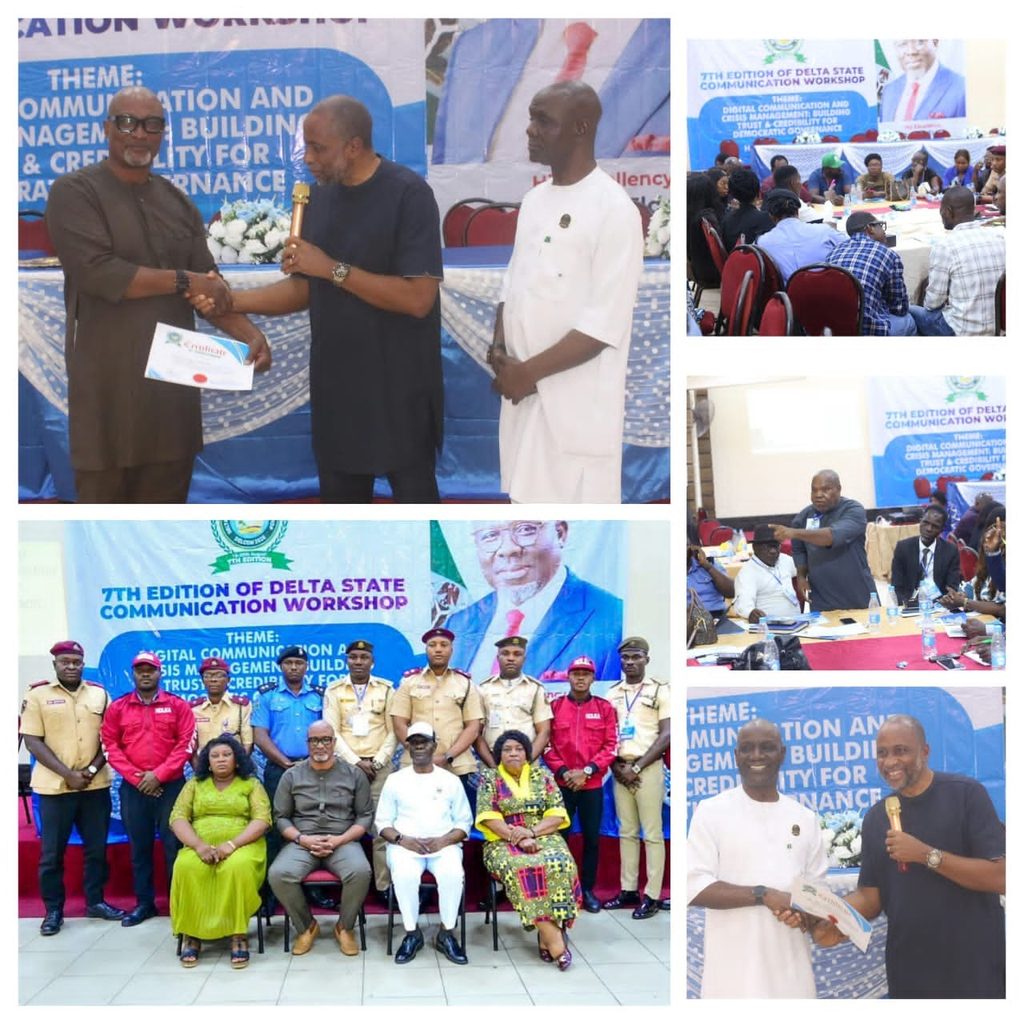
The seventh edition of the Delta State Strategic Communication Workshop, DELCOM 2026, has ended in Asaba, with a charge to participants to deploy the skills acquired to enhance their professional performance and strengthen public trust in government.
Declaring the workshop closed, the Communication Manager, Government House, Asaba, Mr. Jackson Ekwugum, said the training had equipped participants with contemporary skills required to function effectively in an increasingly digital environment. He urged them to translate the knowledge acquired into improved performance in their respective Ministries, Departments and Agencies (MDAs), stressing that the value of training lies on its practical application.
Ekwugum said the Delta State Government remained committed to human capacity development, noting that a professionally equipped workforce was essential to effective governance and efficient service delivery. He commended the Director-General of the Delta State Bureau for Orientation and Communications, Dr. Fred Latimore Oghenesivbe, Esq., for coordinating DELCOM over the past seven years, saying the programme had grown “bigger and better” over the years. He also commended Governor Sheriff Oborevwori for what he described as visionary leadership and deliberate investment in human capital development and programmes designed to impact directly on the people of Delta State.
He urged participants to key into the theme of the workshop, “Digital Communication and Crisis Management: Building Trust and Credibility for Democratic Governance,” and apply digital communication strategically in their respective organisations. He said communicators must use digital platforms not only to disseminate information but also to manage crises, counter misinformation, engage citizens and protect institutional credibility.
Reflecting on DELCOM’s seven-year journey, Ekwugum said the sustained organisation of the programme demonstrated the State Government’s commitment to strengthening the capacity of its workforce. He urged participants to apply the knowledge gained in their daily assignments and share relevant lessons with colleagues, stressing that the success of the workshop would ultimately be measured by improved communication practices, more effective crisis management and stronger engagement between government and citizens.
The State Coordinator of DELCOM, and Director General of the Delta State Bureau for Orientation and Communications, Dr Wilfred Latimore Oghenesibve commended the consistency of the programme for seven years now.
He said the essence of the workshop was to equip media practitioners with requisite knowledge to discharge their duties responsibly.
He said: “I feel good, and we thank God Almighty for the success of the programme. We took off well, and we are closing at this scale.
“His Excellency, Gov. Sheriff Oborevwori made it possible for us, and we are very grateful. The very essence is for us to be equipped professionally in discharging our responsibilities.
“So, DELCOM seventh edition has been a very good one, centred on digital communication, crisis management in order to create credibility for democratic governance.
He lauded the trainers for perfect delivery of the lectures, adding that all the modules reflected the essence of the programme.
He noted that the modules and the group work sections defined what media practitioners should do and not do in order to ensure crisis free environment.
“The modules reflected what we came here to do and the group work also reflected that in doing our job there are things we should do and things we should not do.
“The trainers also explained the connecting bridges in some technical areas, how we can manoeuvre and how to sustain that credibility for democratic governance.
He thanked the trainers; Prof. Joyce Ogwezi, Prof. Presley Obukoadata and Dr Rita Abamba for doing justice to all the modules that were presented during the training.
“They did justice to all the modules/lectures from beginning to the end. So I am very sure that we are living here better than the way we came for this workshop,” he said.
He pledged that DELCOM eight edition would be better, noting that the workshop has trained over a thousand media practitioners drawn from conventional media, social media and government media and aides since inception in the state.
“In this edition, we started with over 160 participants in day one but we issued certificate to 132 participants at the end of the three-day workshop here in Asaba,” he said.
The three-day workshop, which commenced on Tuesday, August 18, brought together government communication personnel and other stakeholders to examine the changing communication environment and its implications for public administration. Organised by the Delta State Bureau for Orientation and Communications, the programme focused on digital communication, crisis management, media relations, reputation management and emerging technologies.
The workshop underscored the growing influence of social media, citizen journalism and artificial intelligence on public discourse. Participants were reminded that information can reach large audiences within minutes, while misinformation and unverified claims can spread with equal speed. They were therefore encouraged to understand digital platforms, verify information before publication and use appropriate channels to provide citizens with timely and accurate information.
Crisis communication was another major focus, with participants reminded that an institutional response can either contain a crisis or worsen it. Speakers stressed the need for government institutions to establish communication procedures, identify authorised spokespersons and ensure that verified information can be obtained and released promptly. Participants were also encouraged to strengthen coordination among MDAs to avoid conflicting messages, particularly during emergencies and sensitive public issues.
The workshop emphasised the link between communication, trust and effective governance. Participants were reminded that public confidence is built through accuracy, consistency, transparency and responsible engagement. Government communication, they were told, should therefore go beyond publicity to explain policies and programmes, address public concerns, correct misinformation and facilitate meaningful citizen engagement.
DELCOM 2026 also highlighted the changing role of government communicators, who are now expected to understand digital platforms, audience behaviour, media trends, crisis management and strategic message development. The workshop stressed the importance of professional ethics, particularly the need to balance the pressure for speed in digital communication with accuracy and proper verification.