Delta State Technical Colleges have received over 3,000 applicants seeking admission following the construction of more of such model schools in the outgoing year by the administration of Governor Sheriff Oborevwori.
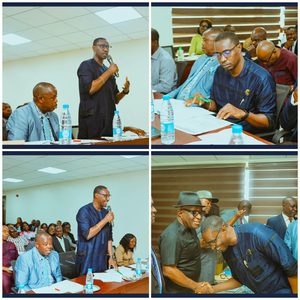
The state Commissioner for Technical Education, Hon. Smart Ijeoma Ufoh, disclosed this while speaking with journalists after defending his ministry’s 2027 budget proposal.
Ufoh said the rising number of applicants was a clear indication that residents were increasingly embracing technical education as a pathway to employment, entrepreneurship and economic empowerment.
He, however, noted that the growing demand had placed considerable pressure on existing facilities, making it necessary for the government to expand infrastructure and establish more technical colleges in additional local government areas.
According to him, the state government is committed to sustaining its investment in technical education, with plans to identify new locations for additional school projects in the coming year.
The commissioner disclosed that the government had initially approved 19 school projects, out of which 10 had been completed.
He stated further that four modern technical colleges were currently under construction, while three others were expected to be commissioned soon.
On the ministry’s performance in the current fiscal year, Ufoh said it had achieved approximately 74 per cent implementation of its capital budget.
He described technical education as a strategic tool for addressing unemployment, developing local manpower and strengthening Delta State’s economy.
Ufoh explained that producing skilled workers locally would reduce Nigeria’s dependence on foreign technical expertise from countries such as Ghana and Cameroon, while also helping to curb capital flight.
He said the government’s vision was to equip young people with practical and marketable skills that would enable them to become self-employed, establish businesses and create jobs for others rather than depend solely on government employment.
The commissioner further explained that a skilled workforce would stimulate economic activities, improve citizens’ purchasing power and contribute significantly to the state’s industrialisation and sustainable development.
He commended President Bola Tinubu and Delta State Governor, Sheriff Oborevwori, for what he described as difficult but necessary economic decisions aimed at securing the country’s future and improving revenue generation for infrastructure development.
While acknowledging the economic challenges confronting Nigerians, Ufoh maintained that the government’s policies were geared towards achieving long-term economic stability and preventing future generations from inheriting excessive debt.
He urged civil servants, politicians, business owners and other residents to support the government, expressing confidence in its development agenda.
Ufoh reiterated that expanding access to technical education remained a priority of the state government, stressing that the ultimate goal was to produce a skilled workforce capable of driving industrial growth, creating employment opportunities and positioning Delta State for sustainable economic prosperity.
By: Sam Erhunmwunsee, Radio Nigeria Asaba