Akwa Ibom State Government says its ARISE Agenda has translated into wide-ranging humanitarian, social protection and grassroots economic interventions, with hundreds of thousands of vulnerable households, women, youths, persons with disabilities and rural communities benefiting from targeted government programmes.
The Commissioner for Information, Aniekan Umana, setting the tone, said the ministerial briefing was designed to provide factual accounts of the impact of the ARISE Agenda, particularly its objectives of reducing poverty, creating jobs and improving the standard of living of Akwa Ibom people.
Briefing journalists in the activities of her ministry, the Commissioner for Humanitarian Affairs, Mrs Emem Ibanga, said the ARISE Free Food Security Programme has so far reached more than 833,481 households across the 31 Local Government Areas, while 500 ARISE Compassionate Homes have been constructed, with 461 already handed over to vulnerable beneficiaries.
Each recipient also receives a ₦500,000 business grant.
According to Mrs Ibanga, the state has also recorded significant expansion in social protection, with 101,265 vulnerable households benefiting from the Conditional Cash Transfer programme between 2024 and 2026.
The beneficiaries received ₦75,000 each, amounting to more than ₦7.59 billion in direct financial support.
For senior citizens, 12,000 elderly persons have benefited from the Elderly Citizens Initiative, while more than 1,481 have been enrolled in the state health insurance scheme.
The administration’s disability inclusion programme has enrolled 1,287 persons with disabilities in the ARISE Health Insurance Scheme and secured 444 mobility aids, including 263 wheelchairs and 181 walking devices. Another ₦100 million educational intervention fund supports 243 students with disabilities.
Youth interventions have equally provided equipment to more than 2,000 youths, while 30,000 young people received ₦50,000 support.
Sixty-two beneficiaries were also provided mini-buses and business support to strengthen their enterprises.
On women empowerment and social welfare, Commissioner for Women affairs and Social Welfare, Mrs Inibehe Etukudo reported that 1,732 widows have been financially empowered and 248 sewing machines distributed to women as livelihood support.
More than 3,600 women were sensitized on rights and inheritance, while 93 survivors of gender-based violence received financial empowerment.
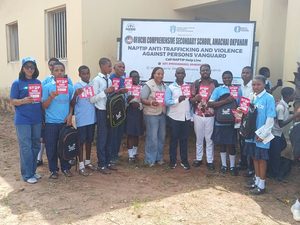
The ministry has also established a 20-member GBV Elimination Committee and engaged 28 communities on harmful traditional practices.
Child welfare interventions have provided care and support to 493 children in government children’s homes, with 22 caregivers and five graduates granted automatic employment.
Children have also received education, skills acquisition and other welfare support.
The Special Adviser on Cooperatives and Rural Development, Mrs Alice Ekpenyong, said cooperative development has become a major vehicle for grassroots economic inclusion, with the number of registered cooperatives rising to 31,607, following the registration of 607 new societies in 2025.
Mrs Ekpenyong noted that 1,760 cooperatives were audited to strengthen accountability, while 5,000 trustees are targeted for capacity building.
Under the ARISE Women Cooperative Programme, 368 cooperative societies have been registered across 369 wards, with approximately 73,000 women targeted in the first phase at a projected cost of about ₦7.36 billion.
According to her, the Bureau also reported the rehabilitation of about 486 kilometres of rural roads under AKRAAMP, aimed at easing the movement of agricultural produce, reducing post-harvest losses and improving access to markets and essential services.
Taken together, the interventions show a broad shift from emergency assistance to programmes combining social protection, livelihood empowerment, economic inclusion and community development, with the stated objective of making vulnerable citizens more resilient and expanding economic opportunities at the grassroots.