
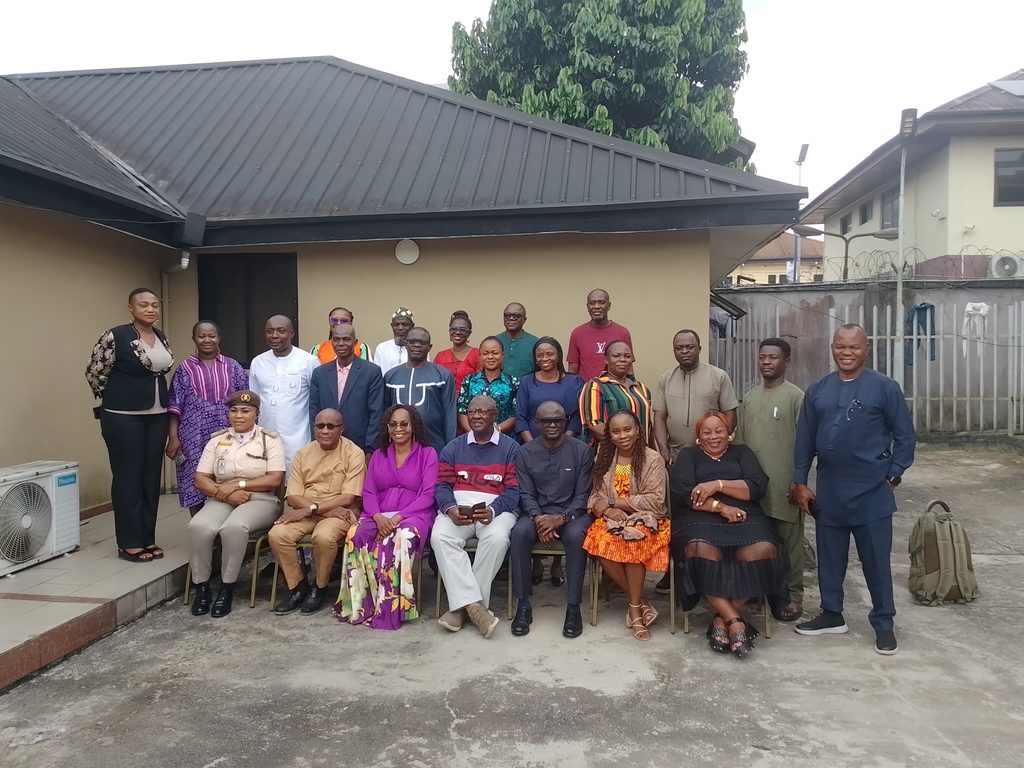
The National Population Commission (NPC), in collaboration with the United Nations Population Fund (UNFPA), is developing a harmonized protocol for marriage and divorce registration in Nigeria.
Historically, marriage registration began in Nigeria in 1863. In 1933, the Marriage Act underwent its first major amendment, streamlining the administration of registries and redefining jurisdictions.
Yet till date, the country still lacks a single, harmonized protocol for marriage and divorce registration, the very reason for the zonal meeting.
Declaring the two day Zonal consultative meeting open in Port Harcourt, the National Population Commission, NPC Director-General Dr. Abu Mohammed, represented by Deputy Director of Migration, NPC, Mr. Caxton Teniola urged participants to produce a practical document.
“Today we begin the next critical stage — the South-South and South-East consultation.
Over the next two days we will present the draft protocol. The outcome must clarify and agree on the mandates, rules and responsibilities of institutions at federal, state, local government and community levels.
We need uniform notification, certification processes and minimum documentation requirements.” Teniola said.
UNFPA Data for Development Analyst Mr. Taiwo Ibinaiye underscored the socio-economic benefits of a unified, digital protocol.
“Marriage and divorce registration still remains zero, completely zero,” Ibinaiye told the gathering.
“Records exist in local government offices, with Imams and in churches, but they are not centralized. This data provides legal backing for women to claim their rights and for children in matters of inheritance. It also helps us estimate fertility rates and determine the number of married women who need family planning services.”
He continued: “With this dialogue we believe we will be able to form a very robust protocol to harmonize our marriage and divorce records.”
Deputy Director in charge of the Civil Registration and Vital Statistics Unit at the NPC, Mrs. Obodo Adaku, explained the Commission’s mandate and the need for harmonization.
“Over the years, the NPC has been doing this registration but has concentrated more on birth, dead, and still birth registration, excluding marriage and divorce notification registration.”
“So it is on the National Population Commission to execute this mandate by ensuring that, irrespective of the type of marriage, be it statutory marriage, be it Islamic marriage, customary marriage, whatever marriage that has been conducted in Nigeria, that the statistics is harmonized. The NPC collects statistics and reports the statistics for Nigeria because, as the body responsible for national data, it is on us to do that. That is the principal factor while we are calling on this harmonization to bring all bodies that conduct marriages and those who conduct divorces so that we can come together and have a unified form, standard protocol of reporting, so that these notifications whenever a marriage or a divorce has taken place, either at the marriage registry, either at the churches, the mosque, we will be notified because we have been mandated to collect this notification and report the statistics for economic and national planning.”
Mrs. Wendy Nnenna Otokanandu, a senior Director in the Imo State Ministry of Justice, highlighted the legal protection that proper registration would provide for women and children especially.
“You know, the rate of registration of marriages and divorces are very low. There are a lot of marriages, and most of them are contracted through other means. But if there is enlightenment, such that those marriages, under the Statutory Act, women and children will be protected.”
“The rate of divorces in this country is very alarming, an average of five, six daily. And if such are registered too, if that means there is legal protection, and you and I know that women and children are more on the receiving end. That is not to say that men do not also suffer from domestic abuse. But it is more on the women. And when these things are registered, we’ll be able to offer legal protection to the women. Because by that registration, you will know how the marriage was contracted, the duration, how many children are involved, and how the marriage ran throughout the duration of the marriage. From there, you’ll be able to determine the legal protection to be offered.”
“Do you know that a statutory marriage has more protection for the woman than that of just ordinary church marriage? And even under the law, it is not every church marriage that is being recognized, because it is seen as a mere blessing.”
Both officials affirmed that a unified marriage and divorce registration and certification system, once fed into a federal roadmap, would make Nigeria’s vital statistics system more complete, culturally responsive and operationally effective.
The zonal consultative meeting drew representatives of ministries, departments and agencies of government, alongside religious and traditional leaders as well as civil society organizations.