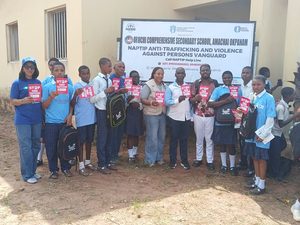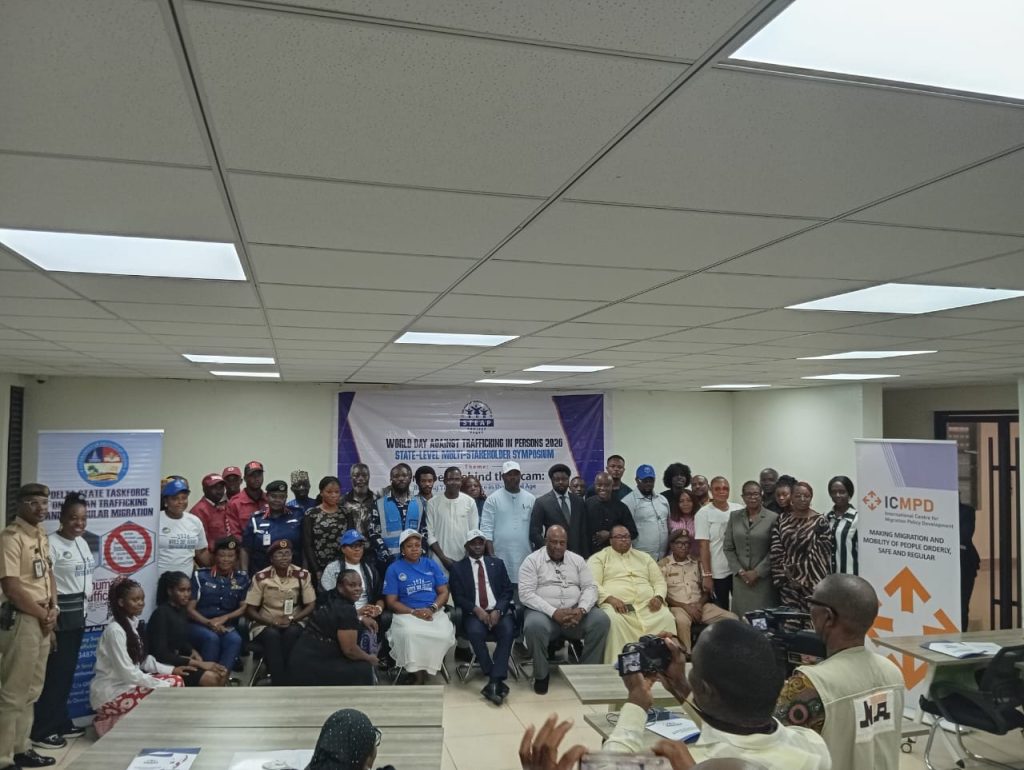
Stakeholders in the fight against trafficking have reaffirmed commitment to strengthening collaboration aimed at combating the heinous crime, particularly the growing menace of digital scams that prey on vulnerable young people.
The commitment was restated in Asaba during a symposium organised by International Centre for Migration Policy Development (ICMPD)in collaboration with the National Agency for the Prohibition of Trafficking in Persons (NAPTIP), the Delta State Government and other development partners to mark the World Day Against Trafficking in Persons.
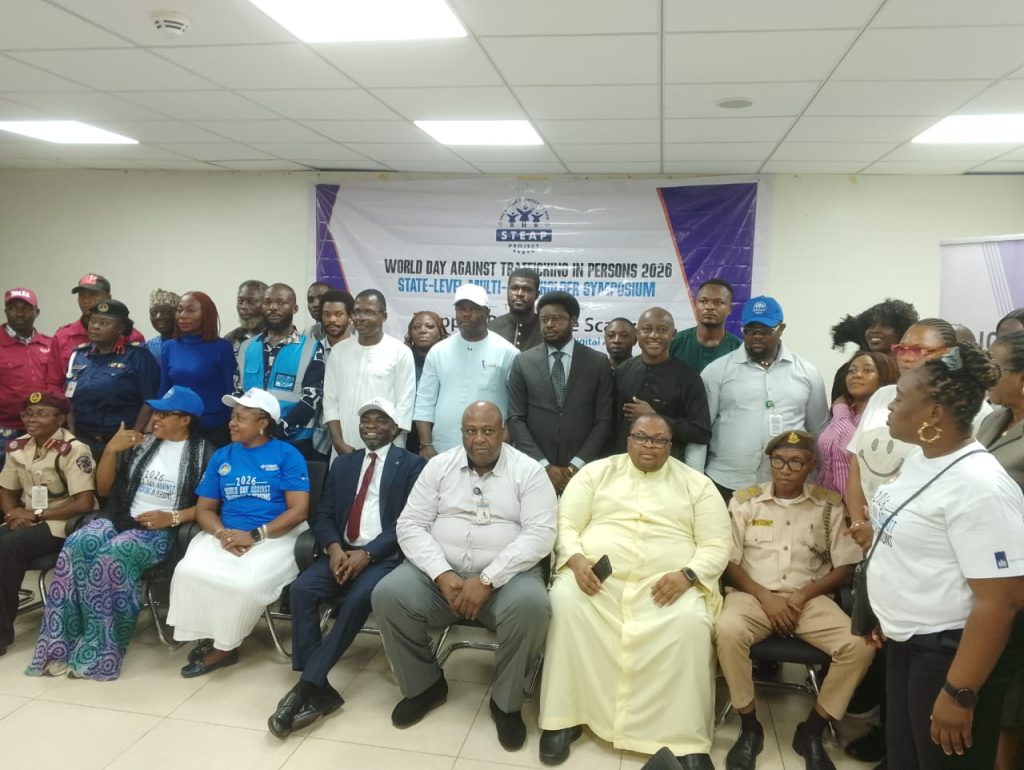
Stakeholders used the symposium as a platform to examine emerging trafficking trends and develop strategies to protect young Nigerians from online deception and exploitation.
Speaking at the Delta State Multi-Stakeholders Symposium to commemorate the 2026 World Day Against Trafficking in Persons, the Delta State STEAP Project Officer of ICMPD, Ijeoma David-Ukoko, said this year’s theme, “Trapped Behind the Scam: Building Youth Resilience in the Digital Age,” underscores the urgent need to equip young people with the knowledge and critical thinking skills to identify and resist digital scams.
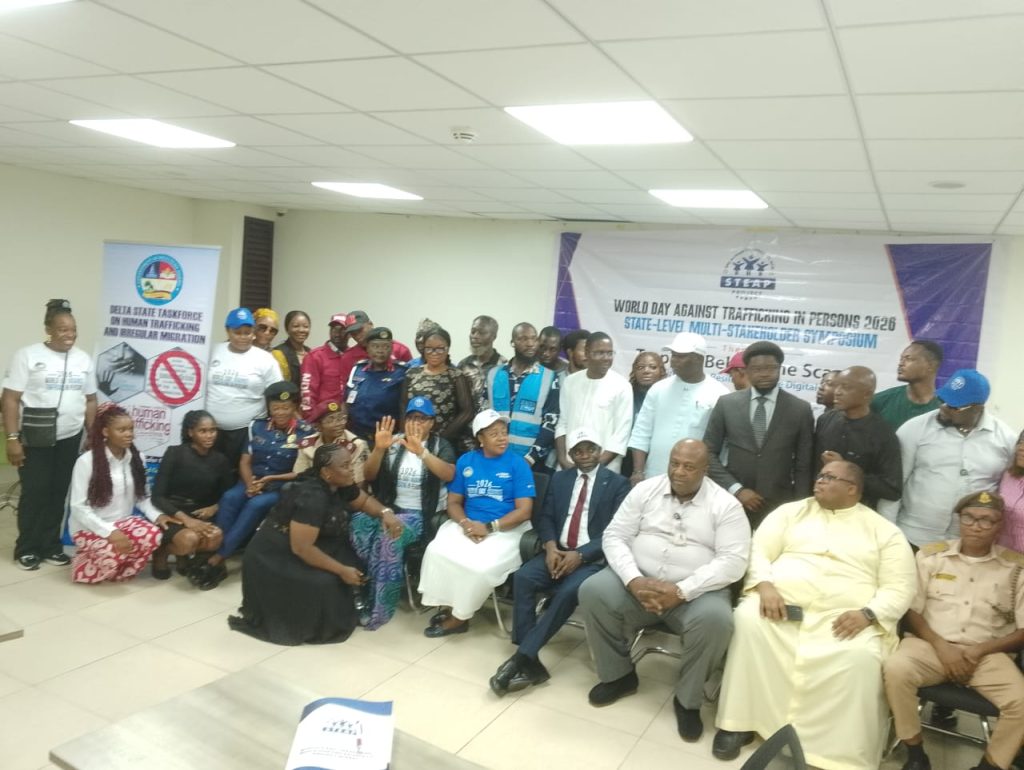
She said the symposium was not merely to mark a global observance but to renew the collective commitment of stakeholders to safeguarding children, youths and communities from human trafficking, describing the crime as one of the gravest violations of human rights.
David-Ukoko noted that while technology has opened up opportunities for education, innovation and economic advancement, it has also become a dangerous tool in the hands of traffickers who use fake job offers, fraudulent scholarship schemes, deceptive online relationships and false promises of better opportunities to lure unsuspecting victims into exploitation.
According to her, tackling the menace requires more than awareness campaigns, stressing that young people must be empowered with the resilience and practical skills to recognise trafficking schemes before they become victims.
She explained that this objective is at the heart of the Schools Anti-Trafficking Education and Advocacy Project (STEAP), funded by the Government of the Netherlands and implemented by ICMPD in partnership with the National Agency for the Prohibition of Trafficking in Persons (NAPTIP), state ministries of education and other key stakeholders, including the Delta State Task Force on Human Trafficking.
David-Ukoko disclosed that the STEAP initiative is currently being implemented in five states—Benue, Delta, Enugu, Edo and Ogun—with the goal of creating safer schools and more resilient communities through education, prevention and strategic partnerships.
Highlighting the project’s achievements nationwide, she said STEAP has reached more than 250 secondary schools, trained over 750 teachers to integrate anti-trafficking education into school activities, and built the capacity of between 300 and 380 Vanguard Club coordinators to mentor students as peer advocates against trafficking.
She added that more than 1,500 Parent-Teacher Forum members have also been trained to identify and report early signs of trafficking within their communities, while over 125 School Improvement Plans have been established to strengthen anti-trafficking structures in participating schools.
The ICMPD official revealed that Delta State alone has established more than 26 of such school-based structures, attributing the success to the unwavering commitment of the Delta State Government and the support of development partners.
She reaffirmed ICMPD’s commitment to working with stakeholders to build resilient communities where young people are empowered to reject trafficking and other forms of exploitation.
In a goodwill message, Delta State Attorney-General and Commissioner for Justice, Ekemejero Ohwovoriole, SAN, said human trafficking had evolved beyond conventional methods, with traffickers now hiding behind deceptive online advertisements and false promises of employment and overseas opportunities to prey on the hopes of vulnerable youths.
The Commissioner represented by the Solicitor General and Permanent Secretary in the ministry, Omamuzo Erebe, SAN, said the Delta State Government, under the leadership of Governor Sheriff Oborevwori, remains unwavering in its commitment to preventing human trafficking, protecting victims and ensuring that offenders face the full weight of the law.
According to him, the state has continued to strengthen its anti-trafficking response through the Delta State Task Force Against Human Trafficking and the Ministry of Justice’s Anti-Human Trafficking Unit, working closely with the National Agency for the Prohibition of Trafficking in Persons (NAPTIP), development partners and other stakeholders.
The Attorney-General noted that the collaboration has enhanced public awareness, improved capacity building, expanded victim support services and reinforced the state’s response mechanisms.
He also highlighted the enactment of the Delta State Trafficking in Persons (Prohibition) Law, 2024, describing it as a major milestone in strengthening the legal framework for prosecuting traffickers and protecting vulnerable persons.
Ohwovoriole stressed that government efforts alone would not be enough to end the menace, calling on parents, teachers, religious and community leaders to remain vigilant and educate young people on the dangers of deceptive online offers.
He urged youths to carefully verify employment, education and travel opportunities before taking any action, warning that offers which appear too good to be true often serve as bait for traffickers.
The Attorney-General further called on participants at the engagement to renew their collective commitment to safeguarding vulnerable persons, expressing confidence that sustained collaboration would help ensure that no resident of Delta State falls victim to trafficking or digital scams.
He commended NAPTIP, development partners and all stakeholders for their continued support in the fight against human trafficking and wished participants fruitful deliberations at the event.
Similarly, Delta State Ministry of Women Affairs, Community and Social Development called for sustained public awareness and stronger stakeholder collaboration to combat the growing menace of human trafficking.
Speaking on behalf of the Commissioner, Princess Pat Ajudua, the Permanent Secretary of the ministry, Mrs. Oghenekevwe Agas, described human trafficking as “a crime against humanity” with devastating consequences for victims.
According to her, the ministry has handled numerous cases involving victims of both local and international trafficking, including children, girls, women and youths, many of whom suffer severe emotional, psychological and physical trauma, with some effects proving irreparable.
She stressed the importance of continuous engagement with critical stakeholders to draw attention to the crime and strengthen efforts to prevent it.
“We must continue to speak about trafficking and educate our children and young people against the deception of traffickers,” she said. “The traffickers are constantly changing and improving their strategies, so our awareness campaigns must also evolve. We need to make our children, girls and youths understand that not everything that glitters is gold.”
Mrs. Agas noted that many trafficking victims come from economically disadvantaged backgrounds and are often lured by promises of better opportunities and improved livelihoods.
She therefore urged young people to exercise caution while seeking greener pastures, emphasizing that contentment and informed decision-making could help prevent them from falling prey to traffickers.
“Everyone has a role to play in this fight,” she said. “Government agencies, communities, parents, schools, religious bodies and other stakeholders must continue to speak out against human trafficking.”
She also shared the heartbreaking story of a young boy currently under the ministry’s care after being trafficked from Dubai.
According to the Permanent Secretary, the boy’s Nigerian mother had married a Saudi national, and both parents died in a tragic accident. He was allegedly deceived into travelling to Nigeria under the guise of being reunited with his mother’s relatives. However, upon arrival, his documents were reportedly destroyed by traffickers before he was abandoned with hoodlums in Asaba, where he was eventually drawn into criminal activities.
Mrs. Agas said the case underscores the cruel tactics employed by traffickers and reinforces the urgent need for increased vigilance, public education and collective action to protect vulnerable persons from exploitation.
Other speakers at the symposium including Deputy Superintendent of Immigration, Delta State, Abubakar Mohamuney; Assistant Commissioner of Police, Delta State Command, Emeka Adigwe; the Director, Justice Development and Peace Commission, Diocese of Issele-Uku, the Reverend Father John Bosco; representatives of Civil Society Organizations, National Youth Council of Nigeria, NBA Asaba branch and FIda , emphasized the need for proactive measures, inter agency collaboration and intelligence sharing in the fight against trafficking in persons.
The gathering attracted representatives of the Nigeria Police Force, Nigeria Security and Civil Defence Corps (NSCDC), National Drug Law Enforcement Agency (NDLEA), Nigeria Immigration Service (NIS), Federal Road Safety Corps (FRSC), Migrant Returnees Association, Vanguard Clubs Coordinators from various Schools, Nigerian Bar Association (NBA), FIDA, National Youth Council of Nigeria (NYCN), religious and traditional institutions, the Delta State Task Force Against Human Trafficking, the Ministry of Justice, Ministry of Women Affairs, Community and Social Development, as well as civil society organisations.
Highlights of the symposium included a presentation on Understanding Online Trafficking and Scams in Nigeria by Mrs Ijeoma Nwanze; Panel discussions, Questions and Answers Session.