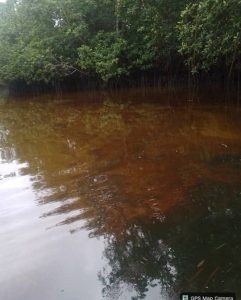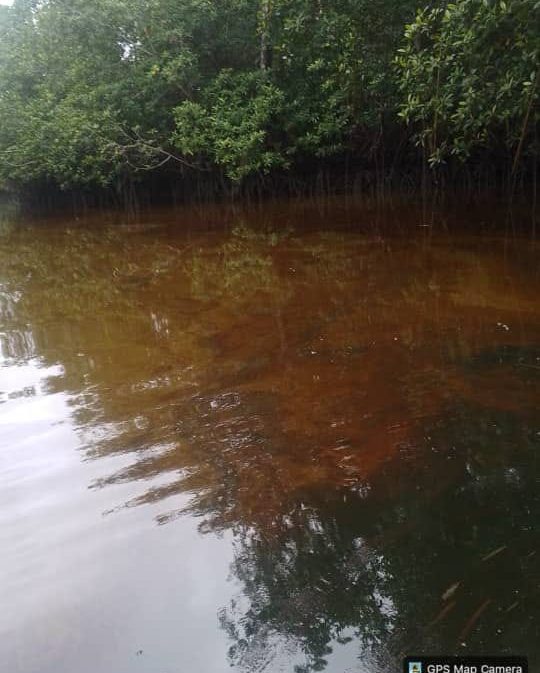
Fishing activities have been severely disrupted and residents unsettled in Bayelsa State following a suspected crude oil spill that has washed ashore the Egweama coastline in Brass Local Government Area.
Residents of the Cape Formosa community report that the spill was first noticed on Sunday, November one, twenty-twenty-six, prompting urgent appeals for intervention and cleanup. Alambo Datonye has the details.
The serene community of Egweama is nestled on Cape Formosa Island along the Atlantic coastline in the Brass Local Government Area of Bayelsa State. For generations, fishing has been the lifeblood of the natives. Yet, the area has repeatedly borne the brunt of offshore oil pollution.
This latest incident was discovered last Sunday evening. While the exact source remains officially unconfirmed, community members allege the spill may be linked to the operations of Aiteo Oil Company, whose vessels transport crude from Nembe Creek into the Atlantic.
The Chairman of the Egweama Community Development Committee, Mr. Tonye Yemoleigha, says the people are in dire straits, appealing to the government to compel the company to execute urgent remediation and cleanup.
‘’ Egweama community in Brass Local Government Area of Bayelsa State is calling for urgent help and cleanup following crude oil spill along the community shoreline on Sunday , November 1, 2026. There are uncertainties about the source of the crude oil but unconfirmed community sources alleged that it is most likely from the activities of Aiteo oil company whose vessels transport oil from Nembe Creek to the Atlantic. Some fishermen accused Aiteo of flushing its oil vessels into the waters thereby polluting the water bodies…calling on the Bayelsa State Government to urgently intervene and compel the oil company or anyone responsible for the spill to immediately undertake remedial action/ cleanup of the environment while medical and relief materials are provided to the Egweama community to cushion socioeconomic hazards of the oil spill. As people who survive from the river, the spill has caused hardship to the Egweama people’’, Yemoleigha noted.
Recounting how the disaster unfolded, a local resident, Ms. Ebimiete David, said it was children who first spotted the dark sludge on Sunday, and the coastline has since been choked by crude.
’’We have been dealing with the crude oil till dawn, fetching crude oil on the shoreline into containers’’. She went on to explain thus ‘’it was at about 5:00pm—6:00pm [on Sunday] that children brought the information of sighting crude oil on the shoreline and the children started fetching little quantities of it. Later that evening, at about 8pm, the full tide brought much quantity of crude oil to the shoreline; when it became convenient to fetch it with bucket. This fetching with buckets continued until about 3:00am when the water receded [ebb tide] and went with the heavy volume of crude oil’’ She said.
The situation is no better at the local fishing camps. Chief Souyo Amasara Alagoa-Inengite, a pioneer settler on the affected shoreline, says fishermen have been forced to stay ashore, with their gear destroyed by the toxic tide.
“On Sunday evening between 7pm and 8pm, we came out with a view to go fishing with our fishing nets; but we couldn’t go fishing as intended because crude oil had covered the entire surface of the water. Some of our fishing nets have also been affected and damaged. We are all stranded on land now as a result of the incident. That was what happened yesterday which we have experienced till this morning. So as we are talking now the Ocean is covered with crude oil. Just now I went out to the sea to drop my fishing nets but there was no way; everywhere is crude oil and I returned disappointed’’ Chief Alagoa-Inengite lamented.
Meanwhile, the environmental advocacy group—Environmental Conservation Agriculture and Rural Development, ECARD—has called for a scientific “fingerprint analysis” of the crude samples. It notes that this is vital to unmask the operator behind the discharge and resolve what the oil industry terms a “mystery spill.”
In its report, ECARD’s Chief Operating Officer, Mr. Alagoa Morris, urged regulatory bodies—including NOSDRA, the NUPRC, and the Bayelsa State Ministry of Environment—to step in, identify the responsible party, and ensure the immediate restoration of the degraded ecosystem.
By: Alambo Datonye, Bayelsa